Hitachi Property and Service promotes sustainability through washable paper bags, enhancing environmental awareness among employees and customers alike.
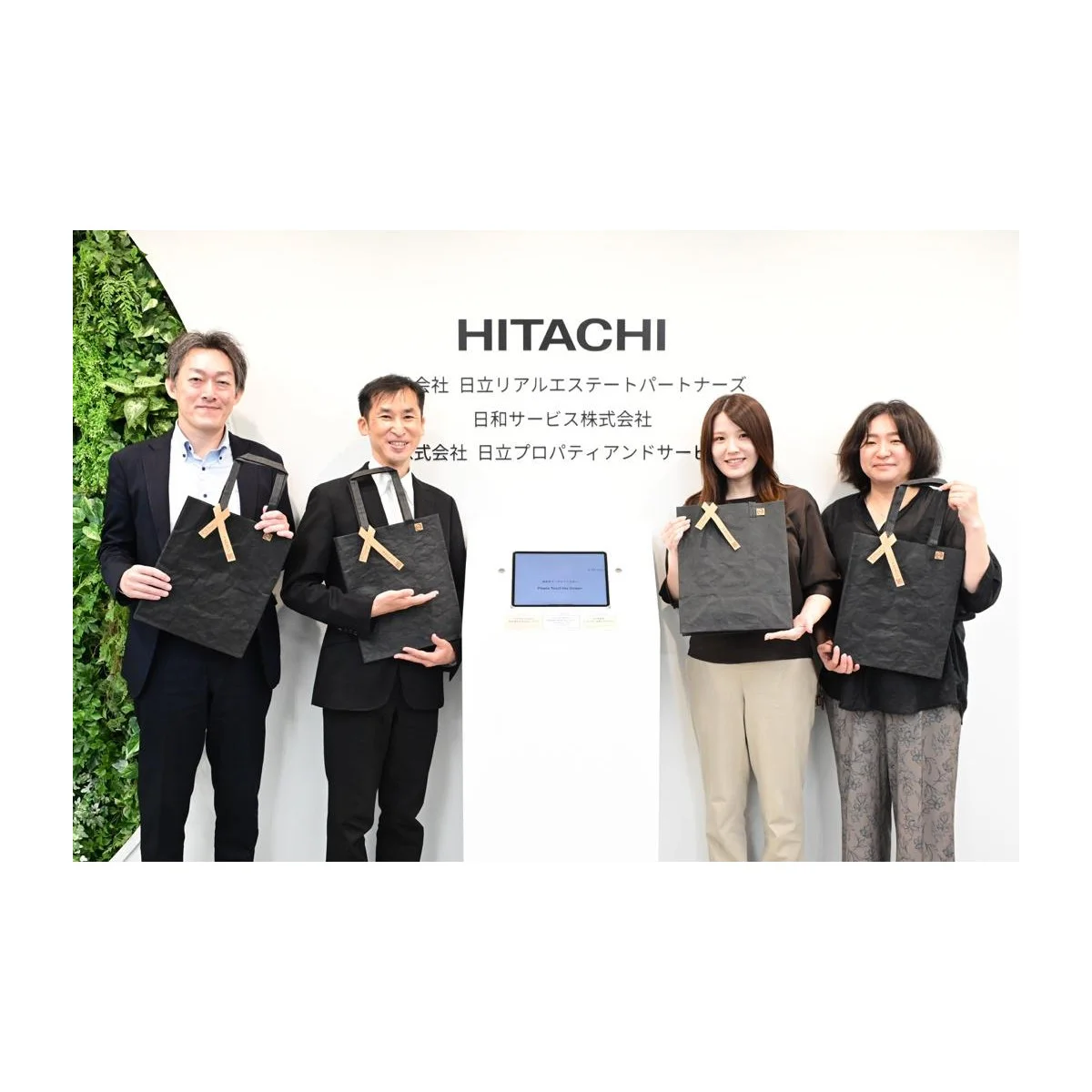
Hitachi Property and Service, a member of the Hitachi Group, is rethinking its approach to sustainability. Since 2026, the company has been gifting new condominium buyers with tote bags crafted from timber-derived washable paper. This initiative aims to reduce environmental impact while encouraging awareness among both employees and customers.
Creating an Impact with Thoughtful Design
In early 2024, Hitachi Property and Service launched a project aimed at promoting sustainable practices, posing the question of how best to represent their commitment. Project member Kazuki Ogura reflects on the decision-making process that led them to create tangible eco-friendly products, stating, "We considered service-oriented approaches but decided that a physical item would resonate more." This choice highlights a trend among companies to produce physical manifestations of their values—a strategy that often creates a stronger, more relatable connection with the audience.
The focus on OUT OF THE WOODS® washable paper bags illustrates an intentional balancing act between style and functionality. Purchasers of new condominiums often receive a substantial amount of documentation, so the durability of these bags becomes essential. Atsuhito Yasukawa emphasizes that "their understated elegance aligns with our branding while emphasizing sustainability." This thoughtful approach aims to foster customer reflection on environmental issues while ensuring that the practical utility of the bags is not compromised. The design isn’t just about attracting customers; it’s an effort to embed a mindset of sustainability in their daily routines.
Feedback from customers has been overwhelmingly positive. Yuka Akagi, who distributed the bags, recalls a customer remarking, "It's amazing to see how seriously Hitachi is approaching these initiatives." Such reactions affirm the company’s commitment to sustainability and underscore the public’s perception of Hitachi’s broader environmental efforts. The enthusiasm around these bags can be seen as part of a growing consumer demand for companies to take tangible steps toward sustainability. It isn’t just a nice add-on; it signals a shift in what customers expect from the brands they engage with.
Insights from Employee Engagement
To further enhance the impact of their environmental initiative, the company distributed the same bags to employees, inviting them to experience their practicality firsthand. This step aimed to not only improve awareness but also initiate discussions about forest-related ecological issues, given the company’s real estate focus. Engaging employees in sustainability initiatives serves a dual purpose: it empowers them as ambassadors for the brand and creates a unified front in addressing ecological concerns. If you're working in this space, you realize how effective internal advocacy can be.
As part of the initiative, a survey was conducted among employees to gauge their environmental consciousness. Ogura explains the findings: "While nearly half knew about the circular economy, many expressed uncertainty regarding their own environmentally friendly actions or purchases." The results indicate that knowledge alone doesn’t translate to action. This gap reveals both a challenge and an opportunity for the company. It’s not just about awareness; it’s about inspiring actionable change. The insight suggests that to truly mobilize employees, companies need to provide clear, accessible pathways for them to engage in sustainable practices.
Transforming awareness into tangible behavior change can be challenging. However, as Ayaka Tabira points out, some younger employees are already proactive about environmental issues. The data suggest that as the next generation becomes more engaged, the potential for significant change increases, particularly in fostering a culture that prioritizes sustainability. That said, companies need to recognize the varying levels of commitment across age groups and tailor their approaches accordingly. Not all employees will have the same stakes in ecological matters; understanding these differences can lead to targeted educational initiatives.
The Bigger Picture: Implications and Future Outlook
Through initiatives like these, Hitachi Property and Service aims to connect practical, everyday actions with broader environmental goals. By actively involving both employees and customers, the company is working towards a future where sustainability is woven into daily life. However, the question remains: can these initiatives influence larger industry standards? With increasing scrutiny on corporate environmental impact, companies like Hitachi may soon find it necessary to step up their efforts. Echoing trends seen across various sectors, a commitment to sustainability isn’t just a branding exercise; it’s becoming a fundamental expectation.
In a landscape where environmental concerns are rising to the forefront, Hitachi's initiatives represent a small piece of a much larger puzzle. They might just be on the edge of transforming their entire corporate culture. (And this is the part most people overlook.) By bringing sustainability into everyday practices, they’re potentially leading a movement that melds personal responsibility with corporate accountability. If they succeed, other organizations may follow suit, compelled by consumer demand and regulatory pressures.
As we look to the future, the ability of companies to engage genuinely in sustainable practices may well dictate success. The conversation isn’t going away. Companies that fail to adopt such initiatives could find themselves struggling to keep pace with those that do. The challenge lies in scaling these efforts effectively to create a meaningful impact—one tote bag at a time or beyond.
Related Links
- Hitachi Property and Service, Ltd.: https://www.hitachi-property.co.jp/
- OUT OF THE WOODS® washable paper bag: https://www.pipeline.jp/oot/



Discussion
Sign in to join the discussion.