Reusing industrial surplus not only mitigates carbon emissions but also presents financial advantages by enhancing equipment longevity and reducing the need for new manufacturing.
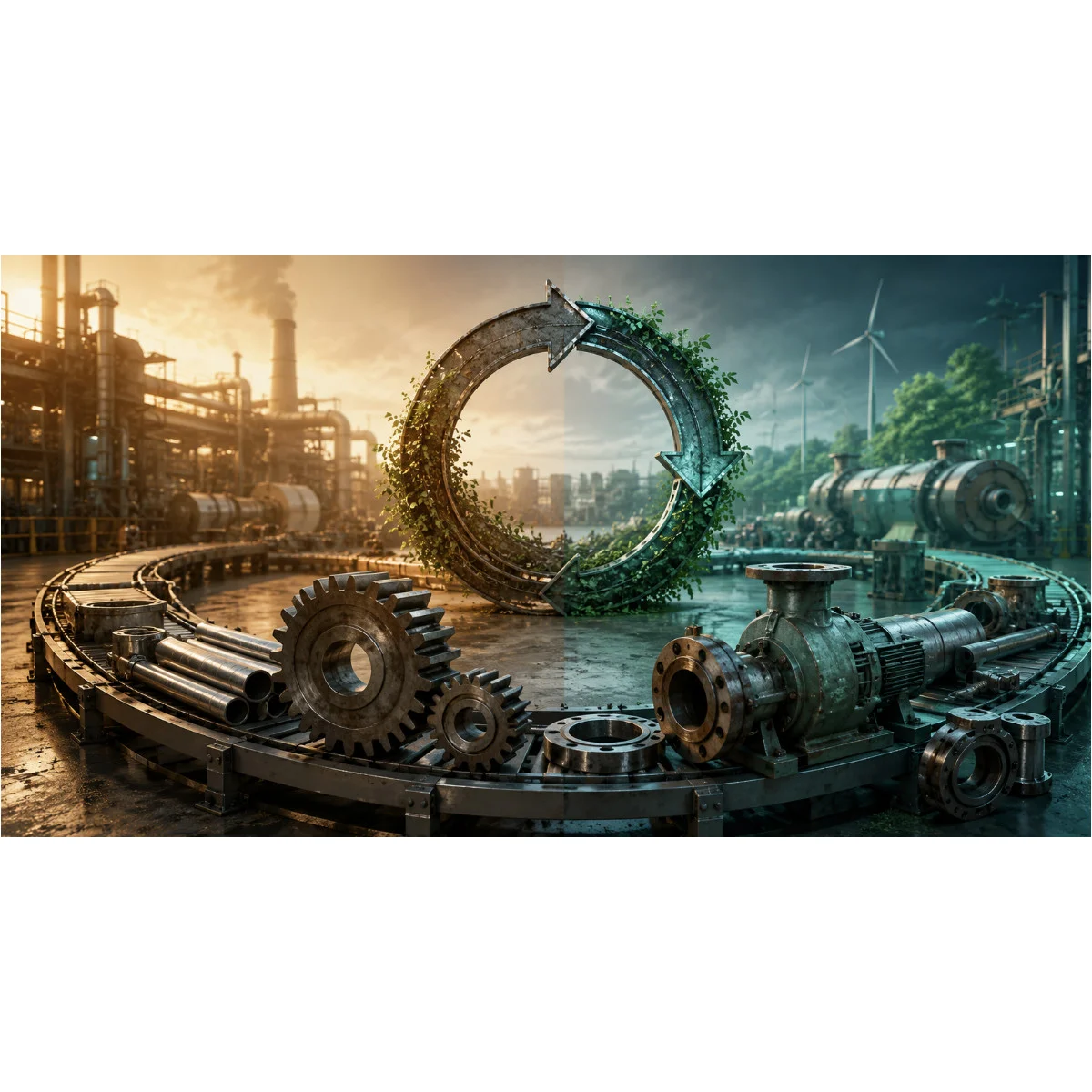
Industrial machinery possesses a significant carbon footprint even before it reaches the operational stage. The environmental toll linked to the production of that equipment has already taken place long before it becomes surplus. When surplus equipment is prematurely discarded, it diminishes the potential value derived from the materials and energy initially invested in its production.
Understanding Embodied Carbon in Industrial Assets
Embodied carbon encompasses the emissions incurred throughout the lifecycle of an industrial asset prior to its active use. This includes carbon emissions generated during the extraction, processing, and assembly of materials necessary for production.
By the time machinery arrives on a manufacturing floor, emissions from various stages—like smelting metals, refining materials, and transporting components—have already accumulated. Hence, scrapping the asset doesn’t eliminate these emissions; it merely disregards its existing value.
The Consequences of Scrapping Usable Equipment
Discarding operational industrial equipment introduces two major carbon-related issues:
1. Wasting Embodied Carbon
When functional equipment gets scrapped before its productive lifecycle concludes, the emissions associated with its production are rendered pointless. This results in a lesser return on the investment made in materials, energy, and manufacturing. While recycling can recover some materials, it fails to preserve the asset's remaining functional value.
2. New Equipment Production
The carbon implications extend beyond the scrapped asset. If a business requires a replacement for the discarded machinery, it typically leads to the ordering of a newly manufactured unit. This process of production triggers a new wave of emissions from raw material extraction to manufacturing and distribution.
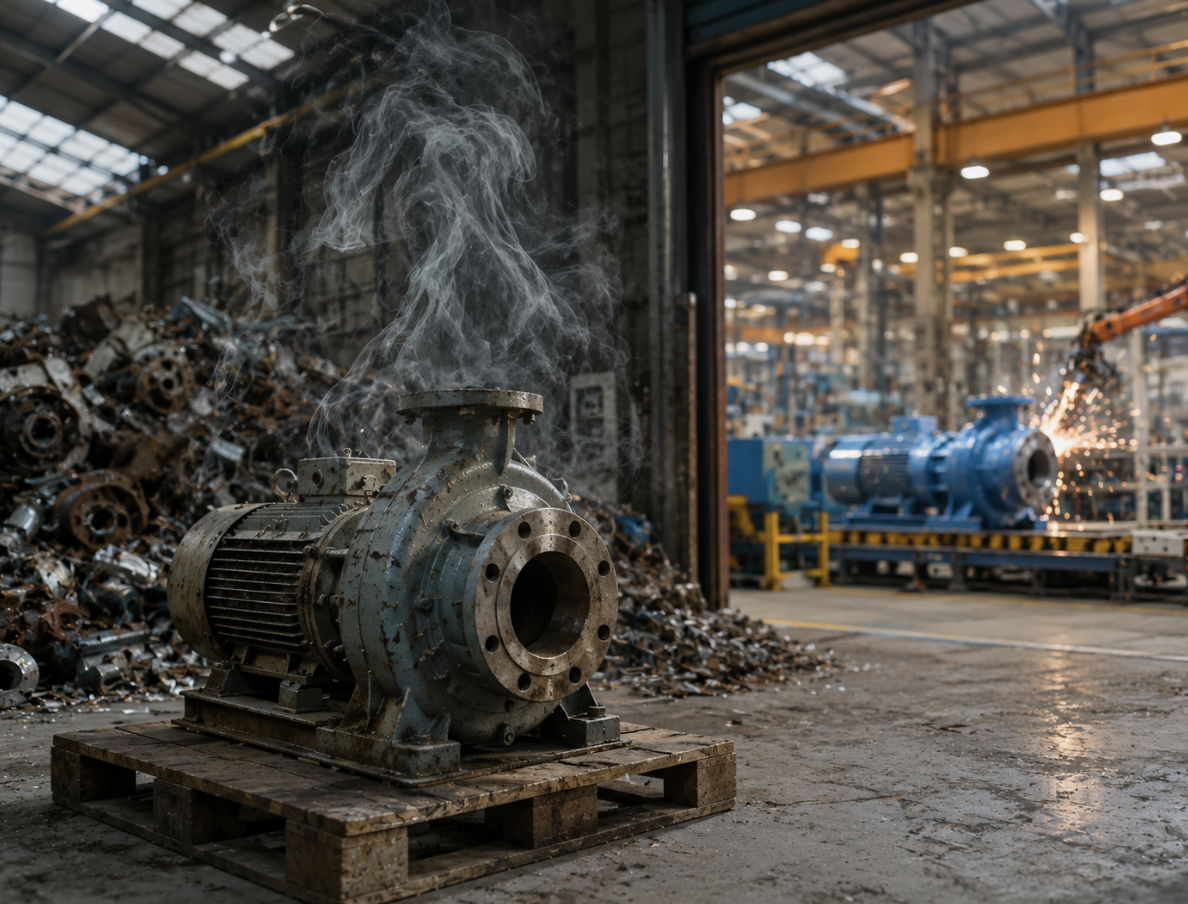
For instance, consider an industrial pump. If a usable surplus pump is scrapped rather than resold, the buyer is likely to request a new one, consequently generating another set of emissions.
Benefits of Reusing Industrial Surplus
By reusing industrial surplus, existing machines remain in productive use rather than heading straight to waste. A surplus asset can either be redeployed within the same organization or sold to another manufacturer needing it.
This practice ultimately curtails the demand for newly manufactured machinery and the associated emissions linked to resource extraction and production processes. Moreover, it promotes circularity within the industry by ensuring that machines stay operational longer. While recycling can recover some materials, it doesn’t capture the full value of the asset.
A recent analysis by the U.S. Department of Energy indicated that in 2018, U.S. machinery products generated approximately 78 million metric tons of CO2e during their lifecycle stages, with around 81% of these emissions originating from upstream supply chain activities. By prolonging the life of existing machinery, companies can decrease the pressure for new acquisitions, significantly mitigating emissions.
Notably, tracking avoided emissions aligns with sustainability metrics, wherein such reductions are distinct from Scope 1, Scope 2, and Scope 3 emissions, according to GHG Protocol guidelines.
Financial Gains from Surplus Reuse
Utilizing surplus inventory creates an avenue for financial recovery in parallel with carbon reduction initiatives. Reselling idle equipment transforms unused assets into cash. Moreover, reassigning surplus internally can diminish the necessity for new purchases and help reduce storage costs.
The ecological advantages arise as well; keeping these assets functional means fewer new manufacturing cycles are needed, which not only conserves resources but also mitigates emissions.
The interconnected nature of financial and environmental impacts becomes evident: extending the life of existing equipment helps maintain its economic value while alleviating the demand for new production.
Forward-Looking Perspectives
By the time industrial equipment is deemed surplus, substantial emissions from its production have already been realized. Prematurely scrapping functional assets diminishes the value potential from the materials and energy expended during their production. By promoting reuse instead of disposal, companies can maintain those assets in active service and effectively decrease the need for new manufacturing. The cumulative impact of these avoided emissions can be significant.
Manufacturers who prioritize reuse find that financial viability aligns closely with ecological responsibility. Maximizing the longevity of existing assets not only conserves monetary resources but also plays a pivotal role in reducing the emissions tied to new manufacturing cycles.



Discussion
Sign in to join the discussion.