A 10-year deal will fund restoration of 8,700 hectares of Brazilian pasture through a model that keeps cattle grazing while adding trees.
A carbon deal built around working land
Google and McKinsey have agreed to buy 320,000 metric tonnes of carbon removal credits from Working Trees over 10 years. The deal links long-term demand for carbon removal to restoration of degraded Brazilian pasture, while allowing cattle production to continue on the land.
That design matters because many restoration projects compete with existing uses of land. Here, the stated aim is to add trees to active pasture rather than take grazing land out of agriculture. It’s a practical proposition for landowners who depend on cattle, though its success will hinge on whether the added trees deliver lasting environmental and economic value.
This is more significant than it looks: the buyers are backing a model that asks restoration and production to coexist. But a purchase commitment is an early signal of demand, not proof that the project will deliver the promised results over time.
Trees on working pasture
Working Trees will use the secured funding to restore 8,700 hectares of degraded and semi-degraded pasture. That area sits within a larger 50,000-hectare project spanning southeastern Amazonia and Brazil’s Cerrado region. The distinction matters: the funded restoration covers part of a broader effort, rather than the full project area.
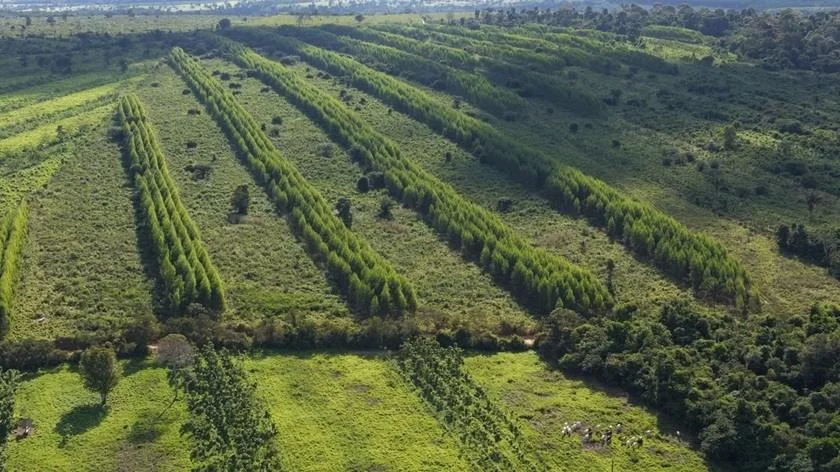
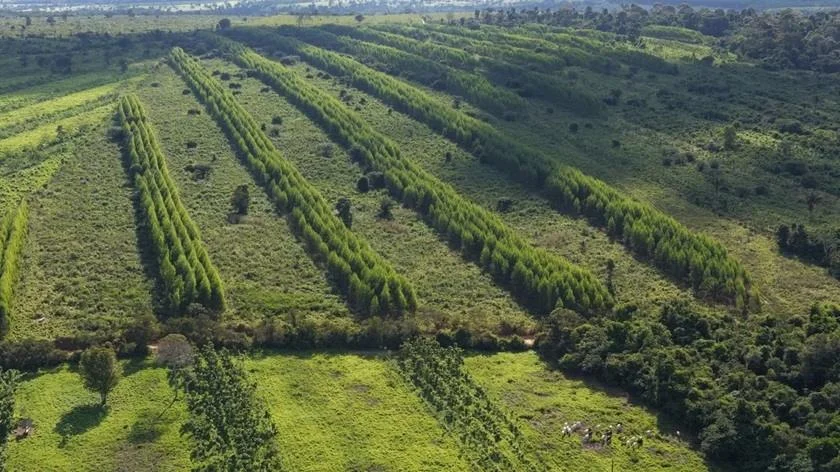
Founded in 2021, the company works with landowners to add trees to existing cattle operations. Its silvopasture plan calls for rows of native and commercial timber species across active pastures, with livestock remaining in place. In this arrangement, trees and grazing share the same land, so how they’re planted and maintained will shape whether cattle production can continue as intended.
The trees are expected to store carbon, provide shade for cattle, and help the land retain soil and water. Those are related benefits, but they depend on the trees surviving and growing over time. The deal’s 10-year purchase period gives the project a long demand horizon; it doesn’t, by itself, establish how durable the stored carbon will be.
The project also aims to improve biodiversity and make pasture more resilient to drought and disease. Native trees are intended to provide ecological benefits and resources for landowners and cattle. Commercial species, including African mahogany and teak, are expected to offer longer-term revenue that could give landowners a financial reason to maintain the trees (and this is the part most people overlook).
That income case will matter in practice. If you’re working in this space, the question is whether the system can make sense for landowners after planting costs, upkeep, and the needs of cattle operations are considered. The source doesn’t provide those details, so the commercial promise remains a goal to test.
For the model to work, landowners have to keep the trees in place while continuing to manage pasture. A carbon credit purchase can support that effort, but it doesn’t settle how costs, timber income, or maintenance responsibilities will be handled. The operating details will determine whether the plan is practical at scale.
Google’s Head of Carbon Removal, Randy Spock, said the project shows food production and ecological restoration can coexist on grazing land. He described the approach as one that could benefit carbon removal and local farming livelihoods. That’s the model’s central claim, and it will need to be judged by what happens on the land over time.
A buyer coalition backing demand
The purchases were arranged through the Symbiosis Coalition, an advance market commitment launched in 2024. Its members have pledged to contract up to 20 million tons of nature-based carbon removal credits by 2030, aiming to give project developers a clearer signal of future demand.
That signal can help developers plan projects that require years of land management before their benefits are established. Yet a coalition target describes intended contracting, not completed removal. Buyers and developers still need to show that individual projects can measure the carbon they store and sustain the land practices behind it.
Symbiosis Executive Director Julia Strong called silvopasture an underused nature-based removal approach with room to expand. She said the Working Trees project pairs carbon storage with improvements to land communities depend on. Scientists cited by the coalition estimate that silvopasture could remove 300 million to 1 billion metric tons of CO₂ a year worldwide. That broad estimate points to potential across the category; it doesn’t show how much this particular project will remove.
For McKinsey, the agreement supports what Global Director of Environmental Sustainability Isabelle Schuhmann called a replicable sustainable land-use model. Replication will depend on local conditions, landowner participation, and whether the mix of tree species works alongside cattle production in practice. A model that succeeds on one project may still require changes elsewhere.
The test is durability
The practical test will be whether Working Trees can deliver durable tree cover and carbon removal while giving landowners a reason to keep the system in place. The agreement gives the project a long-term buyer commitment and puts working pasture at the center of its approach. It doesn’t answer how performance will be tracked or how the project will respond if trees fail to establish.
Here’s the thing: the commercial logic and the carbon claim are connected. If timber revenue helps landowners maintain tree cover, it could support the project’s environmental aims. If those incentives fall short, the model’s appeal to buyers may be harder to sustain. A promising plan. Now comes the fieldwork.
Image source: Working Trees



Discussion
Sign in to join the discussion.