Sosteneo’s second fund has attracted more than €450 million in commitments, while its first fund advances toward operations and income distributions.
A second fund draws early commitments
Sosteneo has secured more than €450 million (US$504 million) in commitments for its second flagship clean energy infrastructure fund. The total includes more than €150 million in new fund commitments and co-investment capital at the first external close. That distinction matters: the headline figure describes commitments to the fund and related investment alongside it, while the first-close figure identifies the capital brought in during this fundraising step.
Generali Investments’ infrastructure unit said the commitments came from several sources: new institutional investors, the largest external investor in Fund I, and an increased contribution from Generali Insurance Companies. The insurer is the cornerstone investor in Sosteneo’s flagship funds. Returning capital and new institutional backing can indicate confidence in a manager’s approach, but early commitments alone don't show how the new fund will perform. The more useful test will be whether the capital can be deployed into projects on terms consistent with the fund’s stated strategy.
This is a substantial start for Fund II, though a first close is a beginning, not a verdict on the fund. Fundraising establishes the resources available for investment; it doesn't establish that the projects will be built on schedule, operate as planned, or deliver the returns investors expect. Those questions depend on execution over time.
Construction-ready projects across Europe
Launched in 2025, Fund II targets construction-ready clean energy infrastructure in European markets. Sosteneo says it is looking for physical assets with long-term, stable and visible cash flows, where experience in construction, financing and revenue contracting can support resilience and value creation. The emphasis on construction readiness suggests the fund is seeking projects that have advanced beyond an early concept, although the announcement doesn't describe specific assets, countries or project timelines.
The strategy spans three areas: integrating renewables and adding flexibility, securing clean energy supply, and decarbonizing industry. These categories point to a wider set of infrastructure needs than building renewable generation alone. Electricity systems must also manage variation in supply, connect clean energy to users, and support industrial activity that has historically depended on more carbon-intensive energy sources. In general, projects in these areas can involve different technical and commercial challenges, so the broad strategy will need to be translated into specific investments before its scope becomes clear.
Cash flow visibility is central to the pitch. Infrastructure funds commonly seek assets with contracted or otherwise predictable revenues, because those arrangements can make long-term planning easier. But the phrase “visible cash flows” doesn't by itself explain how revenues will be secured or what risks the fund will retain. If you're working in this space, that's the detail to watch as Fund II begins deploying capital.
Fund I provides a measure of progress
The fundraising follows Sosteneo’s first Clean Energy Infrastructure Fund, which closed last year with more than €620 million in commitments and €80 million in co-investment capital. About three-quarters of its 39 projects are now fully operational, according to the firm. That operating share gives investors a more tangible indication of progress than fundraising totals alone, though it doesn't tell us the performance of each asset or the fund as a whole.
In the second quarter of 2026, Fund I began distributing income from operating assets to investors. In the third quarter, it signed an agreement to sell a stake in an operating asset, its first partial realization. Income distributions and a partial sale mark different stages of an investment cycle: one shows that operating assets are generating money for distribution, while the other indicates that at least part of an investment may be converted back into cash. Neither detail, on its own, establishes the fund’s total return.
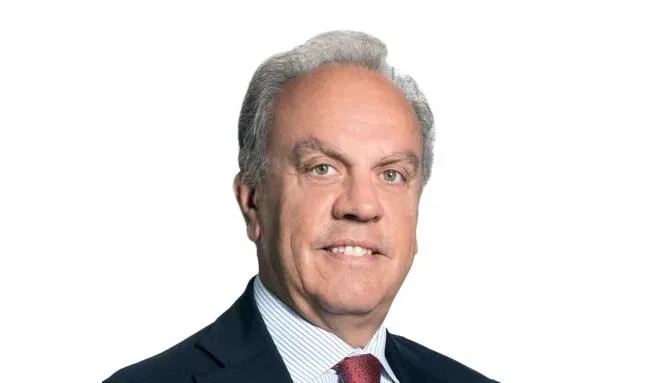
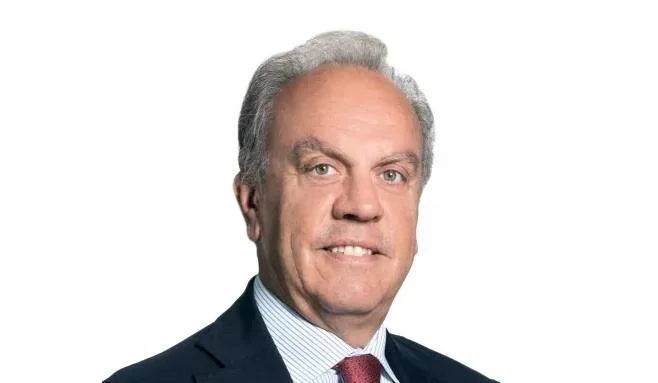
Managing Partner and CEO Umberto Tamburrino said most Fund I projects became operational within three years of the fund’s launch. He described the income distributions and partial sale as signs of portfolio maturation, adding that Fund I was progressing in line with expectations and providing a base for deploying Fund II. Those are the firm’s assessments. The announcement doesn't provide a detailed financial breakdown that would let investors independently evaluate performance, but it does offer evidence of assets reaching operation and beginning to produce distributions.
What the early record can—and can't—show
Fund I gives potential investors a view into Sosteneo’s ability to move projects from investment toward operation. That matters in infrastructure, where a fund’s strategy can sound persuasive long before its assets are built and generating revenue. Here's the thing: the operational status of most projects is a concrete milestone, but it shouldn't be confused with a complete account of financial results. The source provides no project-level returns, costs or operating data, so the record remains partial.
The first partial realization is also an early signal, not a settled pattern. Selling a stake can return capital while leaving an investor exposed to the remaining share of an asset, but the announcement doesn't identify the asset, the size of the stake, or the terms of the agreement. And yet, alongside distributions from operating assets, it shows that Fund I has begun to move beyond construction and into the management of mature holdings. A portfolio reaching that stage. That’s a meaningful step, even if the available details are limited.
Fund II’s next test is deployment
Sosteneo says Fund I’s operating progress provides a base for deploying Fund II. The claim is plausible as a matter of organizational experience: a manager with projects under construction and in operation can draw on lessons about financing, delivery and revenue arrangements. But experience doesn't remove the risks attached to new projects, and Fund II will have its own pipeline, contracts and execution demands.
The next measure of the fund’s progress will be what it buys and builds across its target markets. Readers should look for evidence that commitments translate into identified projects, that those projects reach construction and operation, and that the resulting assets generate the cash flows the strategy depends on. This is more significant than it looks: the fund is asking investors to back a repeatable process, and the early Fund I record is part of the case for that process. That said, the fundraising announcement is an opening snapshot. The quality of the deployment, and the detail Sosteneo provides about it, will determine how much confidence investors can reasonably place in the new fund.



Discussion
Sign in to join the discussion.