Montana’s Indian Education for All Faces a Push for Stronger School Implementation
RELEASE Sep 28, 2026VIEWS 443DESK B. ‘Toastie’ Oaster
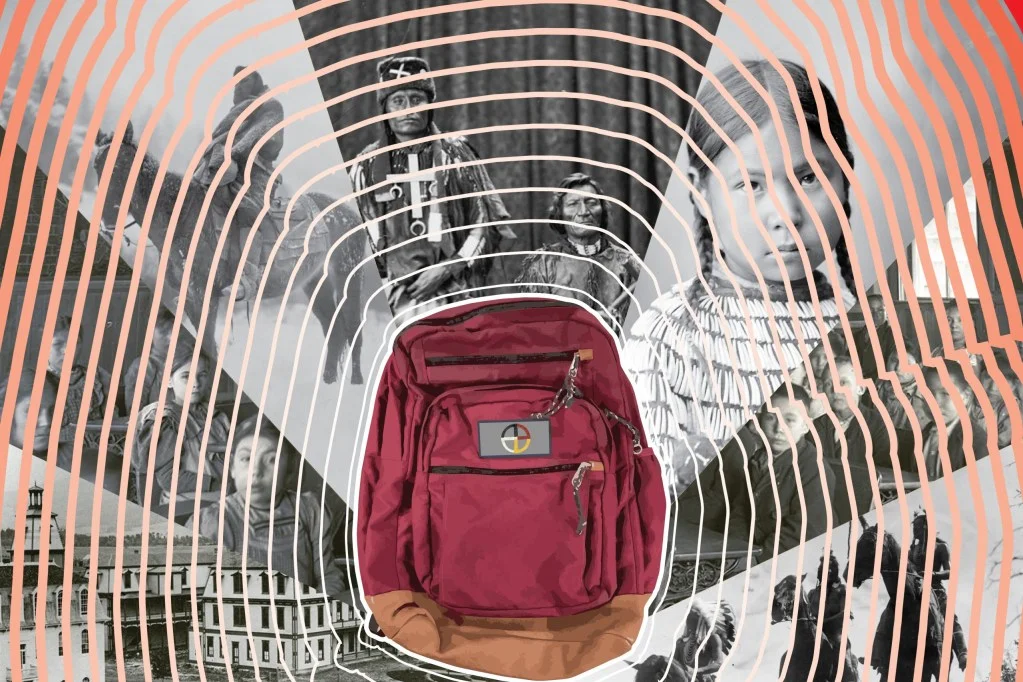
A five-year lawsuit settlement puts renewed focus on whether Montana schools teach Native cultures and contributions as required by Indian Education for All.
Montana’s promise is now enforceable
Montana has something most states don’t: a constitutional commitment to teach students about Native cultures and contributions. The harder question is whether schools actually do it. A settlement reached last month after a five-year lawsuit puts that question back on the state, requiring stronger oversight of Indian Education for All (IEFA). That’s more significant than it may sound: Montana’s experience shows that a legal promise can sit unused until families and tribes force the state to act.
The agreement resolved claims brought by the ACLU, tribal nations, the Native American Rights Fund, students and parents over schools’ alleged failure to provide the education required by law. “Montana’s Constitution has a really unique provision recognizing the distinct and unique cultural heritage of Natives since 1972,” said Samantha Blencke, a senior staff attorney with the Native American Rights Fund. IEFA, enacted in 1999, was meant to carry that promise into classrooms. “This settlement is about making those words into a legal commitment,” she said.
Montana had both funding and clear legal direction, Blencke said, but implementation varied widely. Slightly more than half of school districts had not provided adequate Indian education, she said. “It’s not a new program, or an optional program.”
A constitutional promise with uneven results
Article X of Montana’s 1972 Constitution guarantees equal educational opportunity and commits the state to preserving American Indians’ “distinct and unique cultural heritage” through its educational goals. Outside Hawai‘i, few Western state constitutions offer comparable protections for Indigenous cultures.
Montanans added IEFA to Article X in 1999. It directs educators to work with tribal nations on curricula covering American Indian cultural heritage and contemporary contributions, with particular attention to Montana’s tribes and governments. The Office of Public Instruction says the aim is cultural enrichment, academic engagement and equitable teaching.
The gap between that mandate and classroom practice became visible through an ACLU investigation. Alex Rate, legal director of ACLU Montana, said people across the state had told the organization they weren’t seeing Indian education in public schools. After community members raised concerns, the ACLU sought public records on how IEFA money was spent.
The investigation, underway by 2019, found that although the Legislature appropriated millions of dollars annually, only about half the funding could be accounted for. Some schools were doing strong work; others reported spending on items such as unrelated library books or a librarian’s salary, while some didn’t report their IEFA spending at all. “We didn’t have any transparency into whether or not a school was buying a scoreboard for the football stadium with Indian education money,” Rate said. “Obviously, that’s not the intent behind the constitutional provision.”
The ACLU found parents and tribal nations ready to bring a case. In 2021, the Northern Cheyenne Tribe, Fort Belknap Indian Community, Fort Peck Assiniboine and Sioux Tribes, Confederated Salish and Kootenai Tribes, and Little Shell Tribe of Chippewa Indians of Montana joined as plaintiffs. The Crow Tribe later joined.
The plaintiffs could have targeted individual districts, Rate said. Instead, they sued the Office of Public Instruction and the Board of Public Education, the two agencies responsible for supervising public education statewide. The aim was to make state officials answer for carrying out the constitutional guarantee.
Why representation reaches beyond the curriculum
For Jason Dropik, executive director of the National Indian Education Association, the stakes are personal as well as academic. Growing up in a mostly white urban community in the Midwest, he recalls learning about Native people in roughly “one paragraph in a fourth-grade textbook.” A teacher who knew he was Native then asked him to teach the class about Native people.
Later, as a school administrator, Dropik heard from teachers at neighboring schools whose students didn’t know Native people lived in their communities. The experience, he said, is common across the West.
NIEA reports that 92% to 93% of Native students attend public schools. Even in schools where most students are Native, most teachers are white. Native students are also more likely than students of any other racial group to report fearing attacks at school—about three times as likely as the average American child.
Dropik said research links students’ sense of identity and belonging to safety. Feeling valued, he told *HCN*, can support attendance and, in turn, educational attainment. For schools, that makes Indigenous education more than a matter of adding material to a lesson plan. Relationships with local tribal nations matter too.
Other Western states have taken steps through laws, agencies or curriculum requirements. Oregon and Washington require tribal collaboration on K-12 curricula. California and New Mexico have Indian Education Acts; Arizona, Colorado, Idaho and Alaska have offices or departments devoted to Indigenous education. Wyoming required public schools in 2018 to include the history, traditional culture and contemporary contributions of Wyoming and regional Native tribes in social studies standards. Nevada’s Indian education efforts date to 1997, with funding that has risen and fallen.
Montana’s experience offers a lesson for those states, Rate said: laws can change, but constitutional protections remain foundational.
What the settlement requires
The settlement came in two parts: the Board of Public Education agreed to terms in May, followed by the Office of Public Instruction last month. Together, the agreements affirm that the state must oversee IEFA implementation across districts and at schools falling short—a responsibility Rate said Montana initially disputed.
Blencke described the settlement’s accountability framework as a model other states could use. A policy statement alone doesn’t establish who is responsible, what evidence schools must provide, how compliance will be reviewed or what happens when requirements aren’t met, she said. The agreement sets clearer expectations and calls for lasting government-to-government relationships between the state and tribal nations.
The terms focus on teacher training, records of spending, audits and tribal consultation on curriculum development, rather than additional funding. Neither state agency admitted wrongdoing, but both agreed to more active oversight.
Montana Superintendent Susie Hedalen, who leads the Office of Public Instruction, said in a statement to *HCN* that she was pleased an agreement had been reached and that the state could work to ensure every student receives authentic instruction about Montana’s tribal nations. Confederated Salish and Kootenai Tribes Council Chairman Michael Dolson called the settlement a long-overdue step toward honoring the state’s 1972 promise, adding that IEFA builds understanding and respect across communities.
*HCN* contacted all six tribal nations involved in the settlement but didn’t receive their responses in time for publication. The Board of Public Education declined to comment. In a statement in May, its chair, Tim Tharp, said the board’s time was better spent improving education than arguing in court.
For Dropik, the work depends on how state officials approach tribal nations: as partners in an ongoing relationship, not as parties to a transaction. “Let’s just be present because we’re curious and because we want to continue to support one another,” he said. “When our common good is elevated, then everyone benefits.”
Montana’s settlement puts responsibility for enforcing Indian Education for All on the state agencies that oversee public schools. Agreements with the [Board of Public Education in May](https://montanafreepress.org/2025/05/05/under-settlement-montana-board-of-public-ed-vows-to-improve-how-state-teaches-native-american-history-and-culture/) and the [Office of Public Instruction in August](https://www.mtpr.org/montana-news/2026-08-27/parties-settle-lawsuit-over-indian-education-for-all-program) require the state to monitor districts and schools that aren’t meeting the law’s requirements. Alex Rate of ACLU Montana said Montana had initially denied that responsibility.
For Samantha Blencke of the Native American Rights Fund, the agreement offers other states a practical model: laws need clear lines of responsibility, evidence of compliance, regular review and consequences when schools fall short. She also points to the settlement’s emphasis on lasting government-to-government relationships with tribal nations. A policy promise can sit on paper for years; enforcement gives it force.
The agreements don’t provide new money, and neither agency admitted wrongdoing. They do commit the agencies to teacher training, records of how Indian Education for All funds are spent, audits and tribal consultation on curriculum.
“I am pleased that an agreement has been reached in this five-year lawsuit and that we can move forward with ensuring every Montana student receives authentic instruction on our state’s tribal nations,” Montana Superintendent Susie Hedalen, who leads the Office of Public Instruction, said in a statement to *High Country News*. “In Montana, we support all students and work to ensure they are seen and supported.”
“This settlement is a long overdue step toward honoring the promise that Montana made to its students in 1972, that every child learns about the histories and cultures of our Tribal Nations,” said Michael Dolson, council chairman of the Confederated Salish and Kootenai Tribes. “Indian Education for All builds the understanding and respect that all of our communities need.”
*High Country News* contacted all six tribal nations involved in the settlement, but didn’t receive their responses before publication. The Board of Public Education declined to comment. In a [May statement](https://montanafreepress.org/2025/05/05/under-settlement-montana-board-of-public-ed-vows-to-improve-how-state-teaches-native-american-history-and-culture/), board chair Tim Tharp said, “Our time and efforts are better spent working to improve education for all students in Montana and not arguing in court.”
Jason Dropik, executive director of the National Indian Education Association, says states should approach tribal nations with curiosity and a willingness to build relationships, rather than treating consultation as a transaction. “Let’s just be present because we’re curious and because we want to continue to support one another,” he said.
“When our common good is elevated, then everyone benefits.”
*Editor’s note: This story was updated to clarify that a response from one tribal nation arrived after publication. It also clarifies that teachers at neighboring public schools—not the school where Dropik worked as an administrator—said their students didn’t know Native students lived in their community.*
Discussion
Sign in to join the discussion.