The MIT spinout will use its $6.2 million seed round to build a compact reactor, initially targeting tritium production and isotope research.
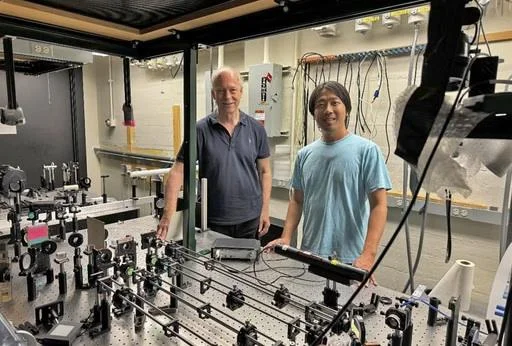
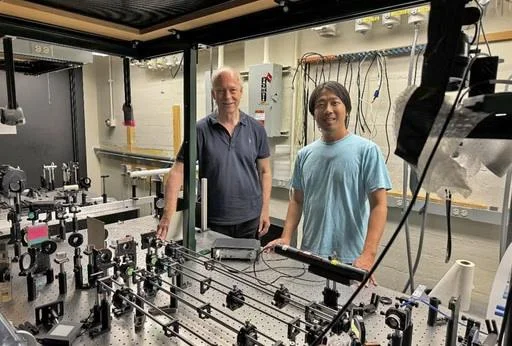
Cambridge Heavy Industries is betting that a compact, rapidly testable fusion system can address a near-term bottleneck for the sector: tritium supply. The MIT spinout has raised $6.2 million in seed funding to build its first compact reactor at its Massachusetts facility. The plan puts a practical intermediate goal ahead of power generation: use fusion reactions to produce scarce isotopes, then build on what the company learns.
That distinction matters. Fusion companies often describe a path toward electricity, but the engineering work and infrastructure needed to make that a commercial reality are substantial. Cambridge is proposing a smaller first step, aimed at materials that already have research uses. Whether the approach can deliver them reliably is still an open question, and the reactor build will provide an early test.
A benchtop route to fusion experiments
Founded in 2025 by CEO Dr. Yun Kai, Raffi Freeman, Professor Keith Nelson and Dr. Steve Kooi, Cambridge Heavy Industries uses commercially available lasers to drive fusion reactions. Its modular systems are designed to fit on a benchtop, with an initial focus on producing tritium and other rare isotopes; generating fusion energy remains a longer-term goal. The compact format is intended to change the pace and cost of experimentation, rather than claim that a small device has already solved the energy challenge.
The company says its approach enables weekly testing and upgrades, in contrast with the years-long development cycles associated with conventional fusion systems. It also reports that advances in shockwave science have delivered compression efficiency 400 times higher than earlier laser-based approaches, at a fraction of the capital expenditure. These are company claims, and the comparison depends on how the earlier systems and efficiency are defined. Still, shorter cycles could help engineers identify problems sooner and adjust components without waiting for a major rebuild.
Cambridge says its prototype occupies roughly the space of two dinner tables and has reached pressures of 350 gigapascals using tens of millijoules of energy. Those are company-reported figures, but they point to the core proposition: smaller equipment and faster iteration could make specialized fusion experiments more practical. Pressure alone, however, doesn't establish that a system can produce useful quantities of an isotope or repeat the result consistently. The next question is whether the compact setup can turn a reported experimental result into a dependable process.
Starting with tritium and neutron applications
Tritium is a radioactive hydrogen isotope used as fuel in fusion research reactors. Cambridge puts its current price at approximately $33 million per kilogram and says global supply shortages could constrain the expansion of fusion research. CEO Yun Kai said the company’s technology is positioned to help address that supply problem. The stated price and shortage concern give the company a clear market rationale, but they don't by themselves show how much tritium its reactor could produce or at what cost.
That gap is central to the business case. A source that makes only small quantities could still be useful for experiments, while a meaningful contribution to supply would require repeatable production at a scale buyers can use. Cambridge hasn't established that outcome in the information provided. Its near-term case will depend on demonstrating what the machine can produce, how consistently it can do so, and whether the process supports the applications it targets.
The company also sees potential uses for its neutron sources in material defect engineering and neutron imaging. These applications give the system a possible role beyond fuel production while Cambridge works toward its longer-term energy ambitions. Neutron tools can support research by probing materials and changing their properties, so a compact source could be relevant even if isotope production takes time to mature. Here's the thing: applications beyond tritium may broaden the system's usefulness, but each will need its own evidence of performance.
Funding backs reactor construction
The seed proceeds will fund an ultrafast laser, optical components and neutron diagnostics for the Massachusetts reactor, as well as team expansion. Azolla Ventures led the round, with participation from Overlay, the Mass Clean Energy Center, Neta Foundation, the Rothrock family and P3A. Those purchases point to a build phase focused on assembling the equipment and measurement capability needed to evaluate the reactor, not just on refining a concept.
Diagnostics matter because a fusion experiment needs measurements that can show what happened and whether it can be repeated. A system that is quick to modify may shorten the learning cycle, but only if its results can be assessed clearly. For a company making claims about pressure, compression and isotope production, the ability to measure outcomes will be part of the proof.
Azolla Ventures co-founder and General Partner Matthew Nordan said the system can be demonstrated on a benchtop and assembled in days with standard optical components. His comparison to rapid test, fail and fix cycles in space and defense technology captures the company’s thesis: shorten experimental feedback loops, and the path to useful fusion systems may become more manageable. The reactor build will test whether that speed translates from prototype results into repeatable isotope production. This is more significant than it looks: a faster cycle can improve learning, but it can't substitute for a result that holds up across repeated runs.
What the reactor build will prove
The Massachusetts project is a practical checkpoint for Cambridge Heavy Industries. It can show whether the company can assemble its system as described, run experiments on a frequent schedule and produce measurements that support its claims. It won't settle the longer-term question of fusion power, which the company itself treats as a future goal.
If you're working in this space, the distinction between a fast experimental platform and a useful production system is worth keeping in view. Speed could make iteration less costly and help researchers explore more options. Yet the value of that speed depends on what the experiments deliver. And yet, the approach gives Cambridge a nearer-term way to test its technology against concrete isotope and neutron applications while the broader energy ambition remains distant.
One test at a time.



Discussion
Sign in to join the discussion.