Optivolt’s $32 million Series A will fund manufacturing and deployment of panel electronics designed to recover power lost to shade and other conditions.
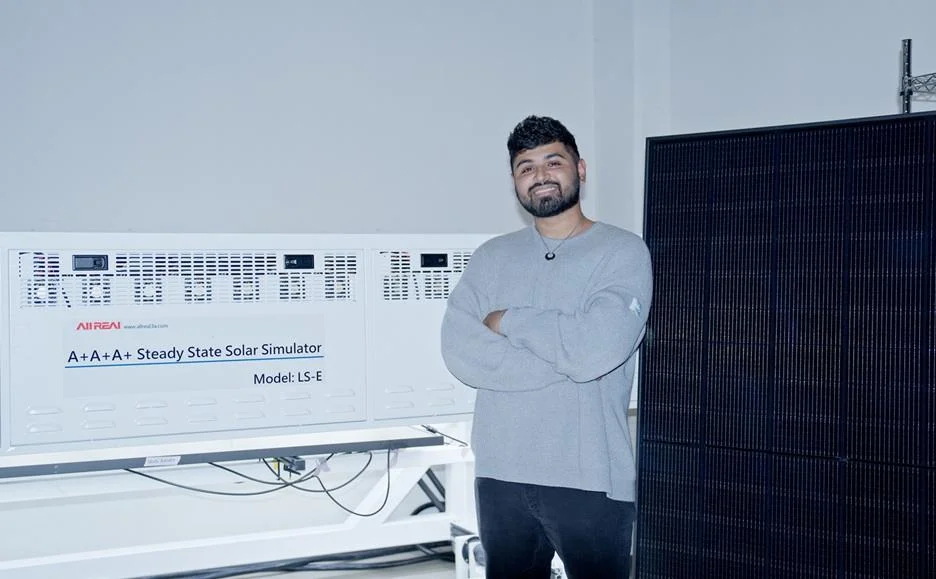
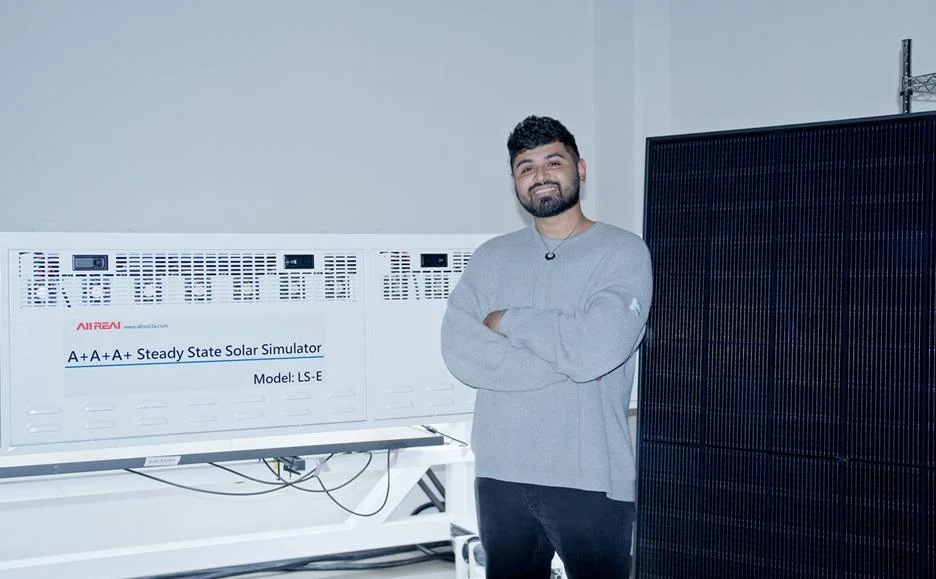
Optivolt is betting that solar panels can produce more by adapting to imperfect conditions, rather than relying on add-on hardware to compensate for them. The San Francisco company has raised $32 million in a Series A to scale its power electronics and intelligent panel technology for residential and utility-scale projects, including installations intended to serve AI data centers. The pitch is straightforward: shade and other real-world conditions can sharply affect output, so panel-level control may recover energy that conventional designs leave unused. Whether that gain justifies a different manufacturing and deployment model remains to be demonstrated.
That distinction matters because solar systems are often designed around expected conditions, while actual sites have trees, dirt, changing weather and equipment that degrades over time. A technology that responds to those variations could improve how much electricity a site gets from its installed panels. But a promising design claim and dependable performance across many installations are different milestones.
Electronics built into the panel
Founded in 2017 by CEO Rohit Kalyanpur, Optivolt integrates power management, monitoring and safety functions into solar panels. Its Power Balancer technology redistributes energy among groups of cells in real time when some cells underperform. The goal is to limit knock-on losses that can reduce output across larger sections of a panel, while combining functions that would otherwise require separate optimization and safety equipment. In practical terms, the company is trying to make the panel itself do more of the work normally assigned to additional components.
That integrated approach could matter most where conditions vary across a panel or across an installation. Similar systems typically try to manage uneven output so one weak area has less influence on the rest of the system. The details of how Optivolt’s design performs over time, and how it compares once installation and maintenance are considered, will shape whether the architecture offers a meaningful advantage. More electronics inside a panel also make reliability and serviceability questions harder to ignore.
Optivolt says internal tests showed panels using its technology generated up to six times as much power as panels with bolted-on optimizers in specific shade scenarios. The company hasn’t provided broader test conditions in the announcement, so the result should be read as a claim tied to those defined scenarios, rather than a general performance comparison. “Up to” describes the strongest reported outcome, not necessarily what a typical installation should expect. That’s a meaningful caveat for customers weighing a purchase around projected energy production.
This is more significant than it looks if the gain holds beyond a narrow test: recovering output from existing panel area could change the economics of sites where shade or uneven conditions are difficult to avoid. But the announcement doesn’t establish how often those conditions produce the claimed benefit, or how the technology performs against alternatives across a full range of installations. The evidence presented is an opening case, not a field verdict.
Scaling the deployment
The new funding will support expanded manufacturing and deployment across residential and utility-scale solar. Optivolt’s stated ambition is to make panels respond in real time to shade, weather, dirt and degradation, recovering energy that conventional systems may lose. Scaling across these project types will test whether the same design can meet different installation needs, from homes to much larger arrays. Manufacturing expansion also puts pressure on the company to produce consistent panels at greater volume, not just demonstrate the concept in controlled conditions.
“For nine years, we’ve rebuilt the solar panel from first principles, embedding aerospace-grade power electronics so it can respond to Earth as it actually is, not the ideal conditions of a lab. The result is the first solar panel system that thinks for itself – one that adapts to shade, weather, dirt and degradation in real time, recovering energy conventional solar leaves behind.”
The company’s language is ambitious, particularly its description of the system as the first to “think for itself.” The practical question is less whether a panel can adjust its operation than whether those adjustments produce measurable, repeatable gains in everyday use. If you’re working in this space, the useful comparison will be actual energy delivered over time, alongside the costs and maintenance demands of the complete system.
The round was led by VXI Capital, a new hard tech fund founded by the former CTO of the Defense Innovation Unit of the U.S. Military. RA Capital, Valo Ventures and Atlas Innovate also participated. The financing brings Optivolt’s total capital raised to $42 million. The investors’ participation gives the company resources to pursue its manufacturing and deployment plans, though funding alone doesn’t settle the technical questions customers will ask.
“The next era of energy will not be built by simply installing more of the same passive solar panels we already have. It will be built by making solar intelligent enough to become the backbone of the global power system. Optivolt has spent nine years building the architecture for that future. This financing is about taking it from a technical breakthrough to the platform on which the next generation of solar is built.”
That’s an expansive vision for a Series A company, and the quote frames the technology as infrastructure for a much wider energy shift. The financing can help Optivolt test that ambition in the market, but the announcement doesn’t show that its system is already a platform or that customers will adopt it at scale. The next evidence will come from deployments and how the panels perform in the conditions they’re designed to handle.
What the next deployments will show
The near-term test for Optivolt is whether its integrated approach can move from defined shade tests into reliable performance across the varied conditions of commercial and residential deployments. That means showing how output changes across different sites and conditions, and whether the reported gains persist beyond the company’s internal tests. It also means proving that the electronics can be manufactured and maintained as part of a panel system at the scale the company is pursuing.
And yet, the underlying problem is real: solar panels rarely operate in perfectly uniform conditions. If Optivolt can demonstrate repeatable gains without adding unacceptable complexity for installers or owners, the design could earn a place in a market that has long relied on separate equipment to manage performance. For now, the strongest evidence is a specific internal shade test. A compelling claim. The field record still has to catch up.



Discussion
Sign in to join the discussion.