The MIT spinout will use its Series A funding to deploy its first commercial system, converting waste methane into fuel at the source.
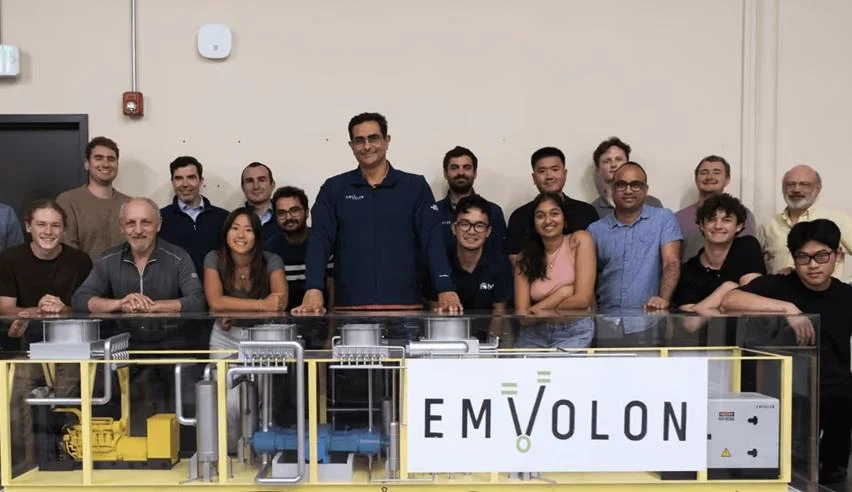
Emvolon’s $22 million Series A is intended to carry the company from pilot work to its first commercial-scale system for turning waste methane into sustainable fuels. That shift matters because industrial processes often need more than a promising demonstration: they need equipment that can operate at a useful scale, at a real waste site, and within the practical limits of the available gas supply. Emvolon, a 2021 MIT spinout, is betting that production can happen close to where the methane is generated, reducing the need to move gas to a centralized facility.
The plan connects two persistent challenges: managing waste gases and supplying fuel to industries that can’t easily switch away from energy-dense fuels. The company’s approach doesn’t resolve either challenge by itself. It does, however, propose a different arrangement for handling them: install smaller chemical production systems at sites that already produce waste gas, then make fuel or chemicals there. The funding will test whether that arrangement can work beyond a pilot.
Modular reactors at waste sites
Emvolon adapts internal combustion engines and other commercially available equipment into modular chemical reactors. Instead of treating these machines only as sources of mechanical power, the company’s system reconfigures them to support chemical production from waste gases. The intended locations include landfills, dairies, wastewater treatment facilities and industrial flare sites, where gas is produced as part of existing operations.
That design choice addresses a logistical problem. A centralized gas-to-liquids plant depends on getting its feedstock to the plant, which can add transportation requirements and expense. Emvolon’s units are designed to process gas where it’s produced, so the company says they can avoid some of those costs. The tradeoff is that a distributed system must make sense at individual sites, where gas volumes, operating conditions and the surrounding infrastructure can differ.
The company describes its units as prefabricated and off-grid, and says they require less capital than conventional gas-to-liquids facilities. Those are company claims that the commercial deployment will need to substantiate. Modular equipment can make projects easier to repeat in principle, but repeatability depends on how much of the installation can stay standardized and how much must be adapted to each site. The cost of the reactor is only one part of that question; operating the system reliably and handling the resulting product matter too.
Emvolon says the products could serve maritime transport, aviation, agriculture, energy and waste management. These are varied markets with different fuel and chemical needs, so a list of potential uses isn’t the same as a list of confirmed customers. For now, the practical question is whether the initial production pathway can deliver a product that fits a real market and whether the site based model can be repeated without losing its cost advantage.
First commercial deployment targets biomethanol
The first system builds on a pilot with renewable energy company Montauk Renewables. Through their joint venture, the companies plan to scale biomethanol production to 50,000 tonnes a year across multiple sites. That target gives the commercial effort a defined product and a stated production ambition, though the article doesn’t specify a timeline for reaching that annual volume or the capacity of the first installation.
Biomethanol is the initial focus, while Emvolon’s broader platform is described as capable of producing fuels and chemicals such as methanol. Moving from pilot to commercial scale will require the companies to establish how the technology performs under operating conditions at the planned sites. It will also test whether the joint venture can coordinate deployment across locations, rather than relying on a single installation to demonstrate the concept.
Emvolon says it intends to pursue further deployments in North America and international markets after the Montauk project. That ambition makes the first commercial system more than a standalone plant: it’s meant to provide evidence for a wider rollout. And yet, expansion will depend on what the initial project shows about cost, operations and site suitability. A modular design can support replication, but it can’t make every waste site interchangeable.
“This round gives us the capital to deploy our first commercial system, prove the model, and start building the supply chains that hard-to-abate industries are actively looking for,” said cofounder and CEO Emmanuel Kasseris. He described onsite production as a way to broaden energy supplies and support regional resilience.
The wording sets out the company’s immediate task plainly: deploy, prove, then build supply chains. The second and third steps depend on the first producing evidence that potential buyers and project partners can use. A fuel supply chain needs consistent production and a route to customers; putting a reactor near its feedstock may simplify one part of the process, while leaving other parts to be worked out. (And this is the part most people overlook.)
MassVentures, VX Ventures, Wagner Carbon and other investors participated in the round. MassVentures’ Priya Yadav said the first commercial system would test whether Emvolon’s standardized modular platform can support a repeatable, cost-competitive approach across multiple projects. That is the core commercial question behind the technology: not simply whether it can produce biomethanol, but whether it can do so at multiple sites on terms that make projects viable.
What the first deployment will need to prove
This is more significant than it looks because the project tests a business model as well as a reactor. If you’re working in this space, the distinction matters: a successful demonstration of chemical production doesn’t by itself show that a company can build and operate a dependable network of small facilities. Emvolon’s case rests on making the equipment practical at waste sites and making the resulting products useful to industries that need fuel or chemicals.
There’s a clear appeal to processing methane close to its source. It could reduce the need to transport gas to a large centralized plant, and it gives waste site operators a potential route to turn gas into saleable products. But the claim of lower capital requirements will need to hold up across projects, including the costs of installation and ongoing operation. The company hasn’t provided enough detail here to judge that economics independently.
The 50,000-tonne annual production plan offers a concrete measure of ambition, while the first commercial system will show how much of that ambition can be translated into operating capacity. If the approach works as intended, Emvolon may have a model that can be adapted to more than one kind of waste site. If the costs or operating requirements vary sharply from site to site, standardization could prove harder to achieve than the platform’s design suggests.
Here’s the thing: the Series A funds a test of execution, not just technical promise. A commercial system must connect available waste gas to production, and production to a market, at a cost that supports repeat projects. The first deployment will give Emvolon and Montauk Renewables a chance to show whether those pieces fit together. For now, the idea is plausible; the commercial proof is still ahead.



Discussion
Sign in to join the discussion.