The TNFD has rolled out LEAP 2.0, elevating its guidance for corporate nature-related reporting and risk management ahead of COP 17.
The TNFD's Evolution and Its Significance
The Taskforce on Nature-related Financial Disclosures (TNFD) has just rolled out LEAP 2.0, a vital enhancement to its guidance aimed at helping organizations evaluate and communicate their relationship with nature. This update is more significant than it looks; it highlights a pressing demand from corporations to understand not just how they are affected by, but also how they affect, natural systems.
Founded in 2021, the TNFD arose in direct response to a growing awareness of environmental issues facing businesses globally. It was modeled after the Task Force on Climate-related Financial Disclosures (TCFD), which focuses on climate risks. Since then, more than 1,000 organizations across 56 countries have adopted TNFD’s guidelines, showcasing a pivotal shift in how companies view nature in the context of risk management.
This rollout of LEAP 2.0 is among the last major initiatives from the TNFD before a formally outlined transition in late 2026, when the International Sustainability Standards Board (ISSB) will take the baton for establishing global standards on nature-related disclosures. With the ISSB’s intent to include the LEAP framework heavily in its new guidelines, this indicates the foundational role LEAP 2.0 will play in shaping future reporting norms. Companies that think this is merely a trend are in for a surprise; these shifts are becoming foundational for responsible corporate governance.
LEAP 2.0 Overview
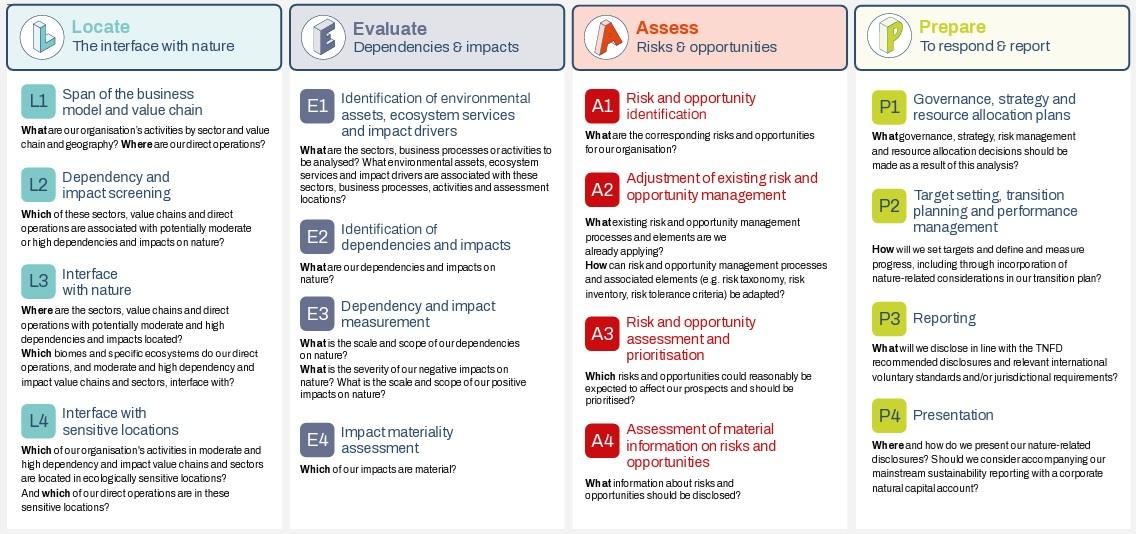
At its core, the LEAP method is structured around four critical phases: Locate, Evaluate, Assess, and Prepare. This framework gives organizations a systematic approach to clarify their interactions with nature, allowing them to evaluate their dependencies and impacts. Rather than just reacting to nature-related risks post-factum, the LEAP 2.0 method encourages organizations to proactively identify and consider nature-related opportunities and threats before creating their public disclosures. It's a shift from a defensive posture toward a more strategic, informed approach.
Key Improvements in LEAP 2.0
In response to market feedback, TNFD has made a variety of important updates in LEAP 2.0. These updates are not frivolous; they’ve been carefully crafted to address real gaps in how companies assess nature-related risks. For instance, there’s enhanced guidance on evaluating potential risks and opportunities associated with nature, alongside new methodologies for establishing the state of natural systems. This comes at a time when businesses can't afford to ignore their environmental footprints, especially with increasing regulatory expectations.
Two notable additions bring more rigor to the framework. First, considerations for environmental crime have been integrated. The implications of environmental crime on reputational and financial health can be disastrous. Therefore, having a clear strategy in place can empower organizations to be proactive rather than reactive.
Second, insights into invasive alien species have been included. These species can pose significant risks to native biodiversity, which is critical for maintaining a healthy ecosystem. Companies should consider how their operations might contribute to or be impacted by such introductions.
Perhaps most notably, LEAP 2.0 incorporates the State of Nature Indicators and Metrics released under the Nature Positive Initiative. These crucial benchmarks will aid organizations in measuring biodiversity health effectively. Accessing reliable metrics is vital for companies that wish to substantiate their sustainability claims rather than make vague assertions.
Context and Forward-Looking Statements
Launched just ahead of COP 17—a significant UN biodiversity conference—LEAP 2.0 positions itself in tandem with updated tools introduced by the Science Based Targets Network (SBTN). This collaboration reinforces an essential idea: collective action is necessary to address the multifaceted challenges surrounding nature. TNFD CEO Tony Goldner articulated this sentiment when he emphasized the pressing need for companies to engage deeply with their nature-related issues. Investing time in these areas now could make all the difference for businesses in the future.
You'll find that companies working within this framework stand to gain a competitive advantage, as doing so aligns them with broader sustainability efforts. This isn’t merely about compliance; it’s about setting a standard that peers might soon feel compelled to meet. The alignment with networks like SBTN is also a signal that organizations are increasingly realizing that nature doesn't operate in isolation—it interacts with various business facets.
Implications and Future Outlook
The release of LEAP 2.0 underscores an important trend that shouldn't be overlooked: companies are being held accountable for their environmental impacts more than ever. As the TNFD prepares to transition its work to the ISSB in late 2026, the implications for corporate strategies could be profound. Those who see this as a checklist for compliance will likely find themselves left behind; true leaders in sustainability will emerge by actively engaging with these guidelines.
What this means for you, whether you're leading a corporation or working in sustainability management, is that understanding nature-related risks could become a core competency. The future will require businesses to move toward greater transparency and accountability in how they interact with ecosystems. Those who resist this shift may not only face regulatory disadvantages but also consumer scrutiny as public awareness grows regarding corporate environmental responsibilities.
Access TNFD’s LEAP 2.0 guidance here.
Image source: TNFD



Discussion
Sign in to join the discussion.