The EIB Group plans to double adaptation financing, backing resilient infrastructure, agriculture and tools to help identify local climate risks.
The European Investment Bank Group plans to commit at least €30 billion (US$34 billion) to climate adaptation by 2030, doubling its financing pace compared with the previous five years. The commitment is a significant increase in the group’s stated ambition, though the headline amount alone doesn’t show how much will reach individual projects or how quickly they’ll be completed. The wider aim is to make resilience work easier to develop and fund across Europe, where public authorities, businesses and communities face risks from heat, drought, fire and flooding.
Adaptation differs from efforts to reduce emissions: it focuses on preparing places and systems for climate effects. That can mean reinforcing infrastructure, changing how water is managed or adjusting farming practices to withstand harsher conditions. Such work can be less visible than a new power source or a major transport project, but disruption to essential systems can carry costs well beyond the location directly affected. The EIB’s plan puts financing behind that practical challenge.
What the plan is designed to fund
The EIB’s Adaptation Plan Phase 2 covers 2026–2030 and targets risks including heatwaves, droughts, wildfires and floods. Funding could support energy networks, public buildings, water systems and climate-resilient agriculture. These categories point to a broad definition of resilience: not a single type of construction, but changes to the systems people and businesses depend on. A water project, for example, may matter to households, farms and local industry at the same time.
The EIB says each euro invested in adaptation can produce up to €10 in economic benefits. That figure makes the case for acting before damage occurs, but it’s a potential return, not a guaranteed result for every project. Outcomes will depend on where money goes, how well a project addresses local exposure and whether it continues to work as conditions change. That distinction matters when a large public financing target is used to describe benefits that will ultimately be experienced in particular places.
Some adaptation work is straightforward to describe, such as improving water storage or making a building more resilient to heat. Other projects may involve several systems and stakeholders, with benefits that are harder to capture in a single financial measure. The plan’s challenge is to make those projects clear enough to assess and fund while accounting for the local differences that determine what resilience requires.
Building a pipeline for resilience
The plan combines financing with advisory support, blended finance and risk-sharing instruments to expand project pipelines and draw in public and private capital. Those tools address a basic problem: a project can be useful in principle and still struggle to attract funding if its costs, risks or expected benefits are difficult for funders to evaluate. Advisory support can help project sponsors develop proposals, while financing arrangements can distribute risks among participants. The plan’s emphasis on building a pipeline suggests that identifying and preparing projects is part of the work, not just providing money once plans are ready.
That process may matter especially for the groups the EIB identifies as priorities: communities and regions exposed to climate risks, cities, small and medium-sized businesses, farmers and climate-vulnerable partner countries. These groups don’t all have the same capacity to develop projects or secure financing. A city authority may be considering water infrastructure; a small business may need help understanding its exposure or choosing an adaptation measure. A common funding target won’t remove those differences by itself.
Here's the thing: announcing a financing ambition is easier than assembling a steady supply of viable projects. The plan pairs investment with advice and risk-sharing because projects need to move from an identified risk to a proposal that can be financed and delivered. This is more significant than it looks. If that project pipeline stays narrow, the headline commitment could outpace the practical ability of communities and businesses to make use of it.
Water, food and ecosystems
Water, food production and ecosystems are among the plan’s named priorities. Potential projects include efficient irrigation, water storage and reuse, resilient farming practices, wetland and forest restoration, and infrastructure built to withstand droughts and floods. Together, those examples show that adaptation can involve both engineered systems and the natural environments that help manage climate pressures. The mix also reflects how closely water availability, agriculture and ecosystems can be connected.
These projects won’t all have the same timelines or outcomes. Efficient irrigation and water reuse address how resources are managed; restoration work addresses ecosystems; and flood-resistant infrastructure is intended to withstand specific physical risks. Treating them as interchangeable would obscure what each project is meant to achieve. The EIB also aims to integrate climate resilience across its operations and improve how it measures results, which could help show whether the financed work is addressing the risks it was designed for.
Measurement is especially relevant when a plan spans different sectors and types of project. A useful assessment has to connect the money committed with the work completed and the risks that work is meant to reduce. The source doesn’t specify how the EIB will measure each outcome, so the plan’s stated intention leaves an important delivery question open. Still, better measurement can help distinguish activity, such as funding a project, from resilience gains that matter on the ground.
Tools for identifying climate risk
For businesses, public authorities and financial institutions, the group plans to launch ClimateSET later this year. Developed with the Copernicus Climate Change Service, the open-access tool will help users assess climate risks and identify adaptation measures. It’ll also feed into an enhanced Green Checker, which is intended to help businesses and financial intermediaries find investments suited to risks in their area.
Risk information can be a useful starting point, particularly for organizations that don’t have dedicated climate analysis teams. But identifying exposure is only one step. Users still need to decide which measures fit their buildings, operations or local conditions, and then determine how to fund and carry them out. The proposed tools may help make climate information more accessible; their value will depend on whether users can turn that information into practical decisions.
(And this is the part most people overlook.) A tool can point to risk, but it can’t make a project affordable or ensure that a proposed response is appropriate for a particular site. The EIB’s plan links its tools with financing and advisory support, placing assessment within a larger effort to develop projects. If you’re working in this space, the practical test will be whether that combination helps move from risk maps and recommendations to funded action.
From commitment to delivery
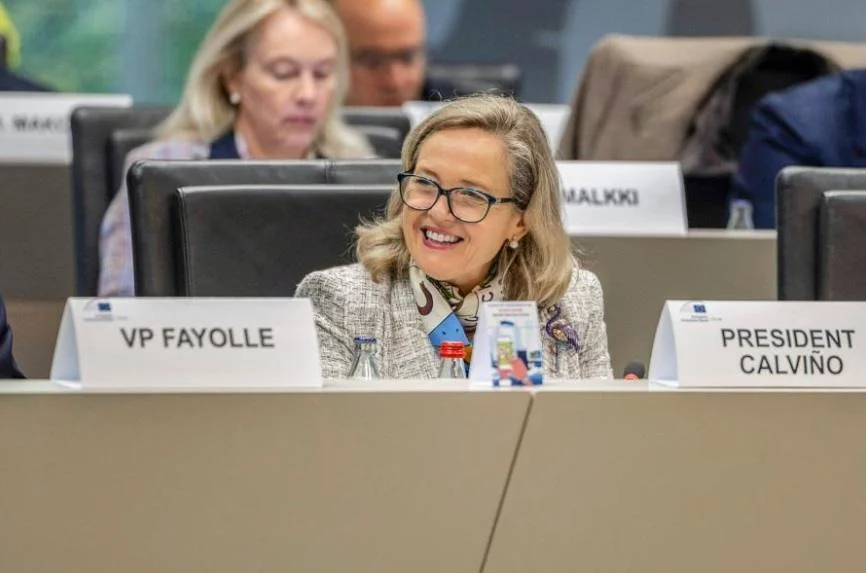
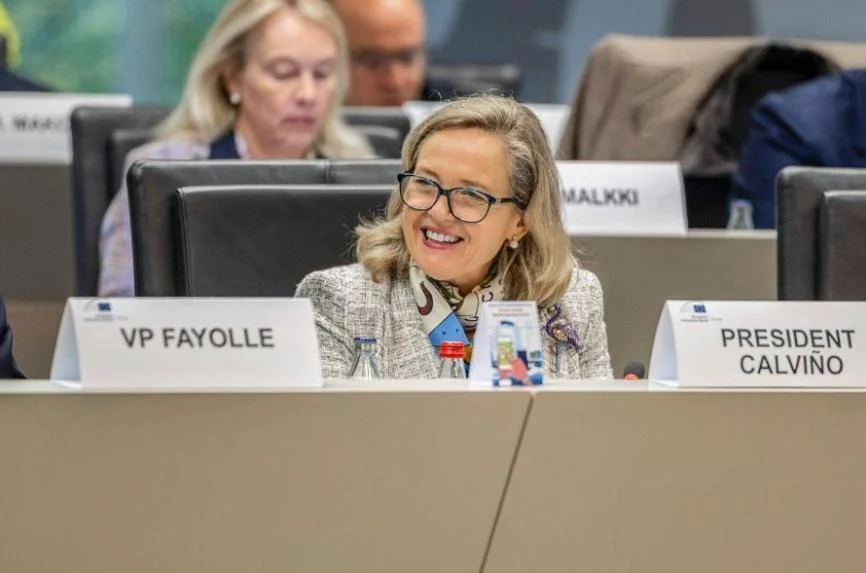
EIB Group President Nadia Calviño framed prevention in economic terms: “Climate adaptation is a no-brainer. Every euro invested in prevention and adaptation to climate change saves 10 euros in damages and repairs.” That argument gives decision-makers a clear reason to consider prevention, but the plan’s delivery will depend on turning the case for resilience into financeable projects, particularly for smaller businesses. A broad commitment can set direction. The hard part is translating it into projects that meet local needs and can be carried through.
The 2026–2030 plan therefore has two linked tests: whether the EIB can commit the stated level of financing and whether that support reaches a varied set of projects across its named priorities. Its advisory services, financing instruments and planned tools are designed to help with the second task. The source doesn’t establish how many projects will be supported or what outcomes they’ll achieve, so those results remain to be demonstrated as the plan is put into practice.
And yet, the scale-up signals that adaptation is being treated as a financing priority, rather than only as a technical response to individual climate risks. That shift could matter to public authorities and businesses deciding whether to prepare projects now. The commitment is a starting point. Its significance will be judged by what gets built, restored or changed, and by whether those efforts make exposed communities and essential systems better able to withstand heat, drought, wildfires and floods.
Image source: EIB, photographer Liam McEvoy



Discussion
Sign in to join the discussion.