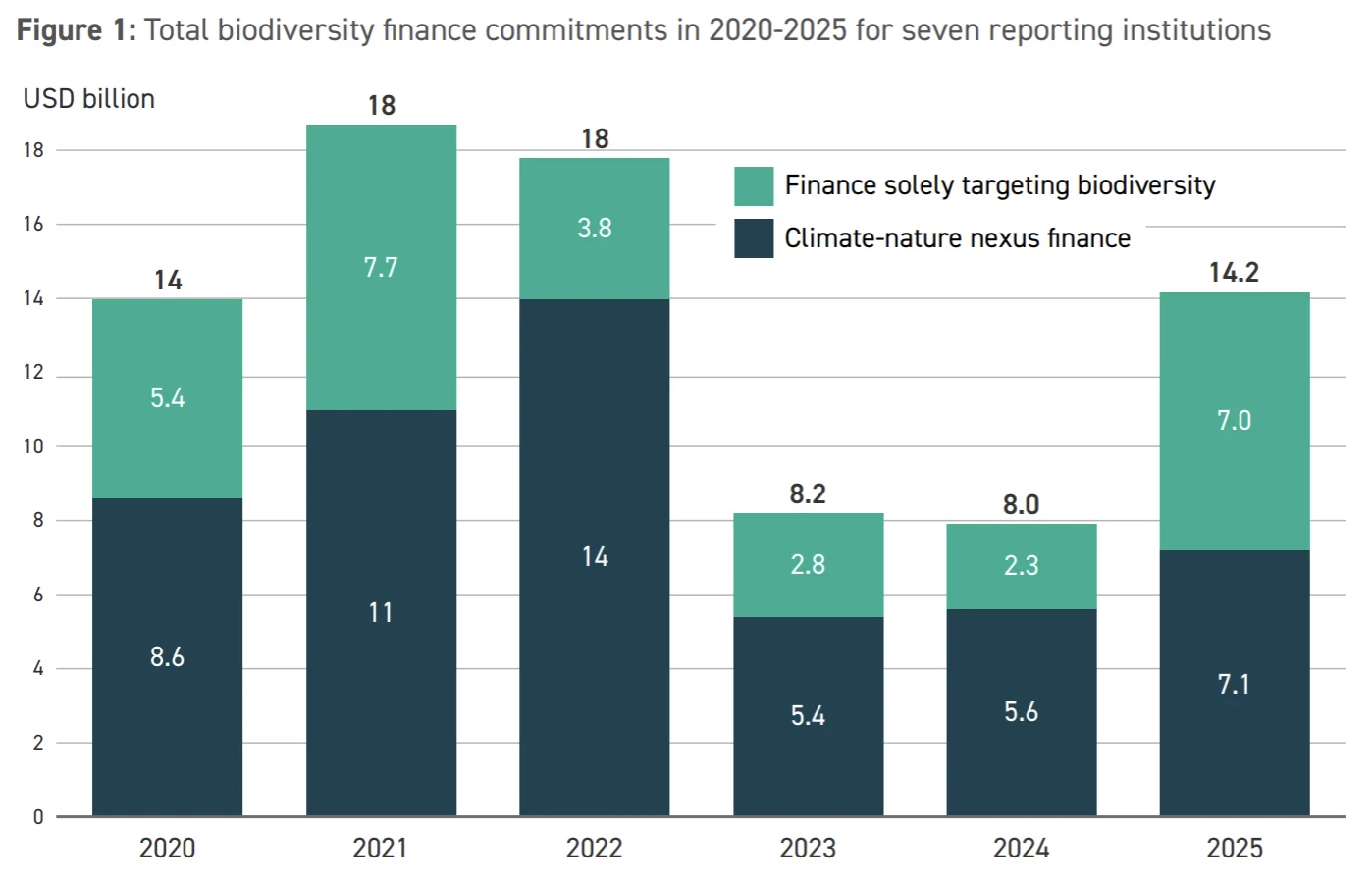
IDFC biodiversity finance hit $14.2 billion in 2025, but members have committed less than half of their $100 billion target for 2027.
The figures also need a careful read. The report’s overview says 2025 finance rose 79% from 2024, while a later finding says it rose 7%. The same finding gives an increase of USD 6.2 billion, implying a different growth rate than 7%. The published figures don’t explain this discrepancy.
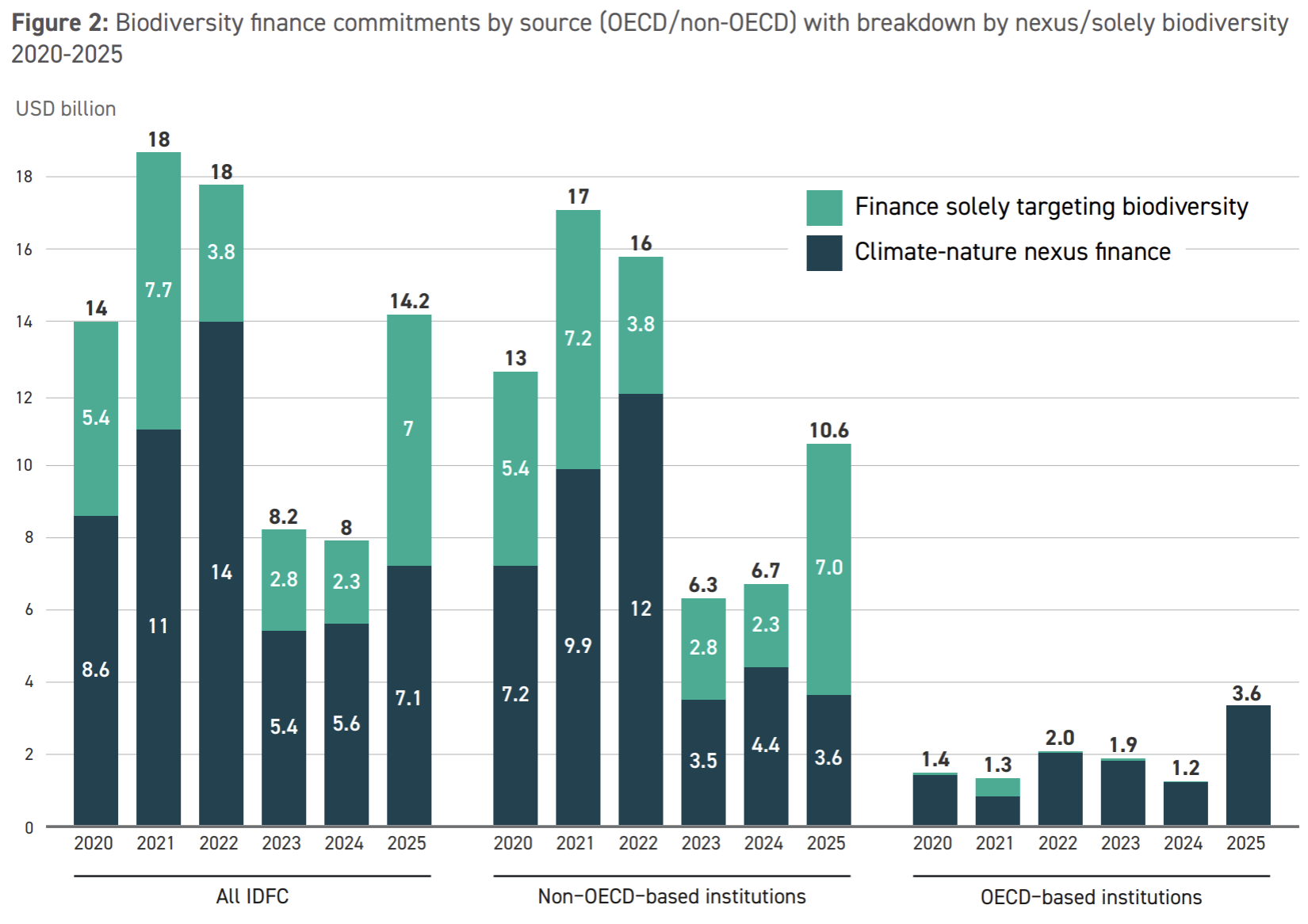
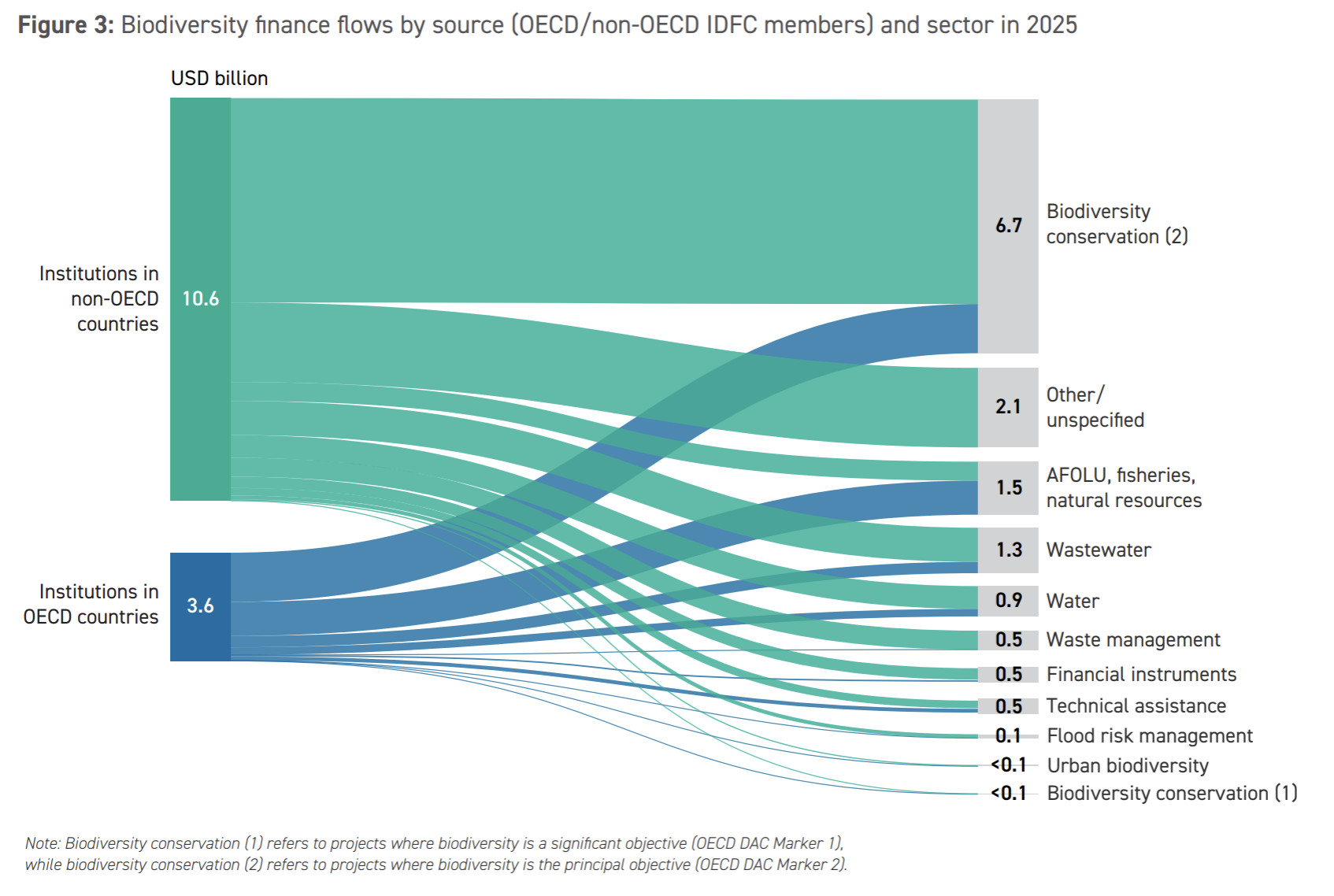
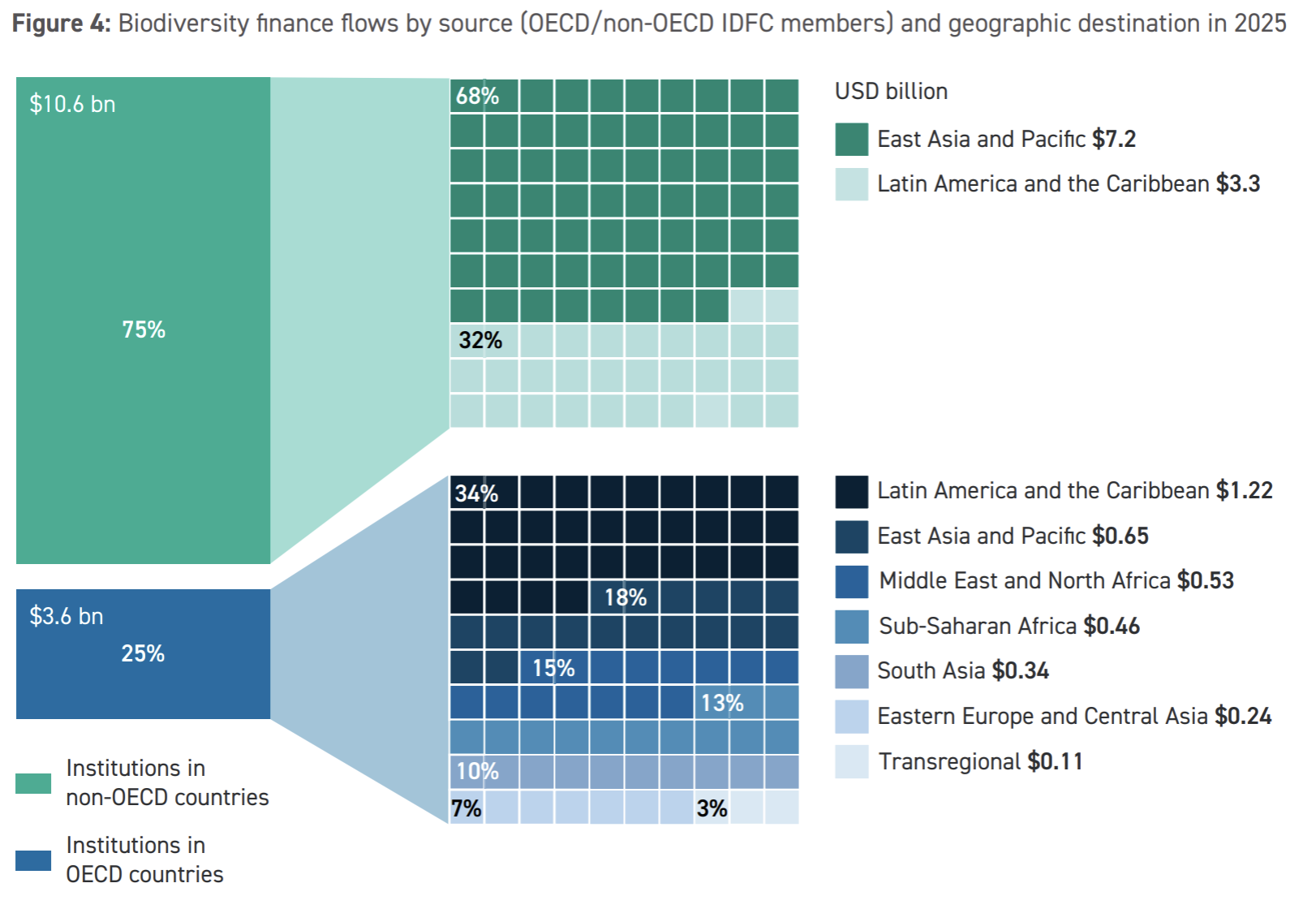
Seven IDFC institutions reported biodiversity commitments in 2025, and all seven increased their finance. Their USD 14.2 billion in commitments amounted to 7% of total green finance. Much of the growth came from a small group: China Development Bank (CDB) increased commitments for activities focused solely on biodiversity, while KfW and the Japan International Cooperation Agency (JICA) also raised theirs. Commitments from OECD based institutions tripled to USD 3.6 billion, with higher figures from KfW and JICA and steady contributions from AFD.
What the figures say about member readiness
Finance is only part of the picture. Of 20 responding members, 12 have a biodiversity strategy in place or in development, and 15 manage biodiversity risk at the project level. Those counts suggest that institutions are putting biodiversity into their planning and project processes, though they don’t show how consistently those policies shape financing decisions.
This is the sixth year IDFC’s Green Finance Mapping has tracked biodiversity finance. The analysis covers both climate and nature finance—funding that supports climate and biodiversity goals—and finance aimed solely at biodiversity. IDFC is a network of national and regional development banks, and its Common Position Paper on Biodiversity dates to 2022.
The analysis was written by Mairéad Barron, Gaoyi Miao, Charles Baudry and Costanza Strinati. Published October 26, 2026.
Report and related material
Download IDFC GFM 2026 Biodiversity Analysis (599.1kb)
Graphics library:
Funder: IDFC ( ).
Program: Climate Finance Tracking. Region: Global. Topics: Climate Finance, Development Finance and Green Finance.
Related work: IDFC Green Finance Mapping 2025, IDFC Green Finance Mapping 2024 and IDFC Green Finance Mapping 2023.
Share: Facebook · Twitter · LinkedIn · Copy URL.
Biodiversity finance is growing, but one bank drives the surge
Dedicated biodiversity finance rose from USD 2.3 billion in 2024 to USD 7 billion in 2025, roughly tripling. Funding for projects with both climate and biodiversity goals grew 27%, from USD 5.6 billion to USD 7.1 billion. The two categories each accounted for half of reported finance for the first time since tracking began in 2020.
That split needs context. China Development Bank (CDB) committed USD 6.2 billion to biodiversity-only activities in 2025, compared with USD 1 billion to climate-nature projects. Other reporting members directed most of their biodiversity finance to projects that also address climate goals. The headline growth is real, but it rests heavily on one institution’s commitments.
Strategies are spreading; targets lag
In 2026, 20 of the 22 responding IDFC members completed a stocktake on progress against the club’s 2022 Common Position Paper on Biodiversity. Seven have a biodiversity or nature strategy, and five more are developing one. Only four have set quantified targets.
Operational safeguards are more common: 15 members use safeguards, due diligence or exclusions to manage biodiversity impacts. Fewer have progressed from avoiding harm to financing positive outcomes. Only two assess nature-related risks across their portfolios; both do so where supervisory requirements apply.
Members at every stage of strategy development report similar obstacles: limited biodiversity data, too few bankable projects, gaps in technical capacity and weak client demand. That shared list suggests the bottleneck isn’t simply a lack of policy commitments.
A sizeable gap remains
IDFC members have reported USD 49 billion in cumulative biodiversity finance since 2022, less than half of the club’s goal to mobilize USD 100 billion over five years by 2027. Strategy work has not yet produced financing at the promised scale. Closing the gap will depend on more members measuring and reporting their contributions, alongside a substantial increase in dedicated investment.
What would make the commitment deliver?
IDFC’s next step is to connect plans with the people and projects that can put them into practice. Seven members report gaps in their own technical capacity, their clients’ capacity or both. Pairing finance with technical assistance could help strengthen environmental agencies and governments, where limited capacity can hold back project development.
Members also need ways to judge progress beyond total dollars committed. Useful measures could include the share of portfolios screened for nature-related risks, the number of clients helped to develop biodiversity strategies, and the area of ecosystems protected or restored.
Private capital is another weak point. Ten members say they have yet to mobilize any private finance for biodiversity, while existing support relies largely on grants and loans. Project preparation, blended finance and partnerships could help address barriers to private investment. Those tools won’t solve the shortage of bankable projects or expertise by themselves, but they offer a route to widen the pool of funding.
The full IDFC Green Finance Mapping 2026 report, covering climate and other environmental finance as well as biodiversity, is scheduled for publication on 6 November 2026. Until then, the figures point to a clear test: can the club turn growing strategies and a concentrated funding surge into broader, measurable investment?



Discussion
Sign in to join the discussion.