PureTerra II will back early-stage water technology companies, helping proven solutions move from pilots to industrial deployment.
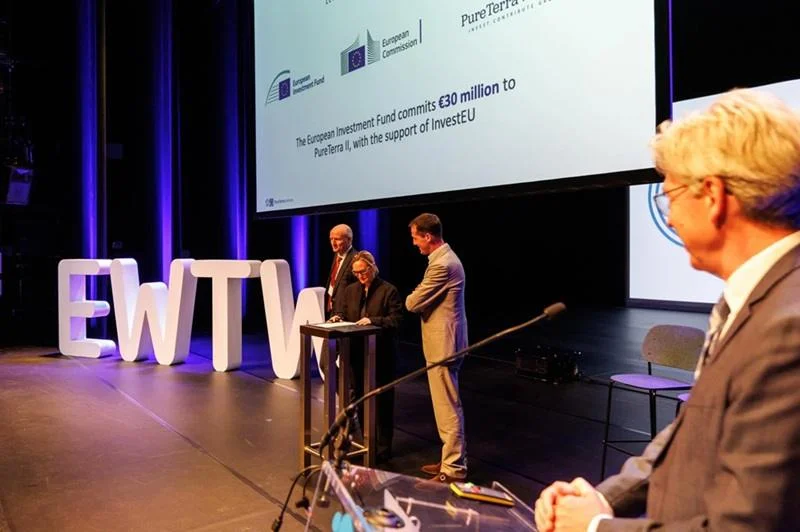
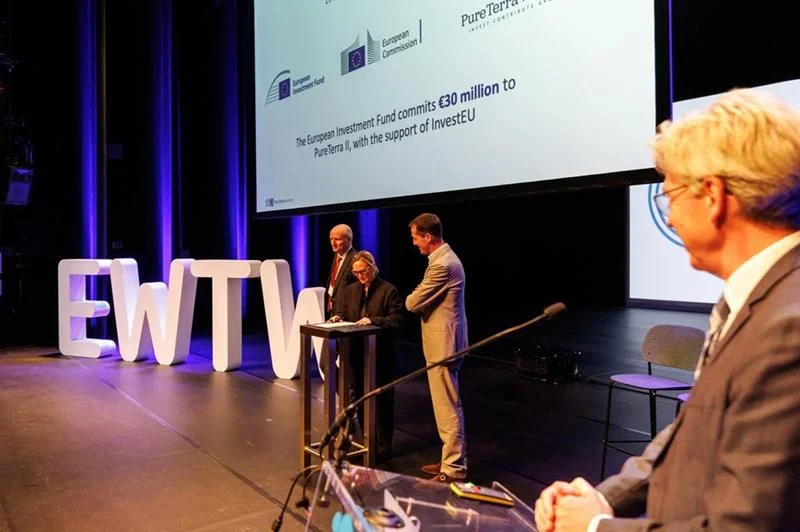
Moving water technologies beyond pilot projects is the focus of PureTerra Ventures’ second fund, which has secured a €30 million commitment from the European Investment Fund (EIF). The early-stage fund will primarily back companies in Europe, aiming to help solutions that have already shown promise reach industrial scale. That focus addresses a familiar gap in technology development: a working pilot can demonstrate that an idea has potential, but it doesn’t establish that the system can operate reliably across larger sites or meet the needs of industrial customers.
The EIF commitment is supported by the European Commission’s InvestEU program. It arrives as the Commission estimates that meeting existing EU water regulations requires an additional €23 billion in annual investment. PureTerra says its fund aims to bring more private capital to the sector, where the distance between technical promise and broad deployment can be costly to bridge.
That distance matters. Water systems underpin household supplies, industrial processes and environmental management, yet technologies in the sector can require substantial testing and adaptation before customers adopt them at scale. The fund’s stated emphasis on proven solutions suggests that PureTerra is looking for companies past the earliest demonstration stage, while still operating in the early-stage investment market.
Backing technologies for water resilience
Founded in 2017 and based in Amsterdam, PureTerra invests in companies working on water treatment, monitoring, recycling and efficiency. Its areas of interest include industrial water management, water quality monitoring and water reuse. These categories span different problems: some technologies aim to make water safer or more suitable for a given use, while others seek to reduce waste or make better use of existing supplies.
That breadth reflects how water resilience is rarely a single-technology challenge. Monitoring can help operators understand water quality or system conditions, while treatment and reuse can address what happens to water after it has been used or contaminated. Efficiency measures can reduce demand. A fund working across these areas may encounter companies with very different customers, deployment requirements and routes to commercial adoption.
The EIF says the investment aligns with the European Commission’s 2025 European Water Resilience Strategy and the EIB Group’s Climate Adaptation Plan and Water Resilience Program. PureTerra II will target technologies for preventing water pollution, treating water, building circular water systems and managing resources in a changing climate. Those are broad goals, and the announcement doesn’t identify individual investments or specify how the fund will measure progress across them.
EIF Chief Executive Marjut Falkstedt said Europe’s water resources face pressure from climate change and excessive use. PureTerra Partner Job van Schelven said the EIF’s backing would help take proven European technologies from pilot to full-scale deployment, where they can support water security and industries that depend on reliable supplies. Their comments describe the fund’s purpose, but the practical test will be whether portfolio companies can turn that support into installations that work outside controlled pilot settings.
The hard part comes after the pilot
A pilot project can show that a process works under a defined set of conditions. Scaling it means confronting a different set of demands: larger volumes, integration with existing infrastructure, operating costs and the needs of the organization buying or running the system. Similar systems typically have to prove not only technical performance, but also that they can fit into real operating routines. A successful demonstration is a milestone, not a guarantee of commercial adoption.
This is more significant than it looks: financing the transition from pilot to deployment can determine whether a useful technology reaches the organizations that need it. Early-stage investors can provide capital and support while a company develops, but the announcement doesn’t say how much PureTerra II will invest in each business or what milestones it will require. That leaves open how the fund will handle the costs and uncertainty involved in scaling different kinds of water technology.
Private capital also has to find a workable relationship with public priorities. The EIF commitment, backed through InvestEU, connects the fund to a public investment program and to policy goals around water resilience. That connection signals institutional support for the sector, though it doesn’t by itself establish that every company backed by the fund will succeed or that the financing gap identified by the Commission will be closed.
What the commitment signals
The €30 million commitment is a concrete vote of confidence in the case for financing water technology companies in Europe. The scale of the need cited by the Commission is much larger, at an estimated €23 billion in additional annual investment to meet existing regulations. The two figures describe different things—a fund commitment and a broader annual investment requirement—so they shouldn’t be treated as directly comparable measures of progress.
Here’s the thing: the fund’s importance will depend less on the announcement itself than on what its portfolio can demonstrate in practice. Can companies move from pilot projects into sustained operations? Can they show value to industrial users and water managers? The source doesn’t provide answers yet, but those are the questions that will determine whether the fund’s deployment focus produces lasting results.
If you’re working in water technology, the announcement points to a potential source of European early-stage backing for solutions aimed at treatment, monitoring, reuse and efficiency. It also underlines the commercial challenge: technical proof is only one part of the job. Building a system customers can adopt, operate and maintain at scale is the next step—and often the more demanding one.
And yet, the funding gap remains the larger story. A single fund can support selected companies, while the Commission’s estimate points to a sector-wide investment requirement. (And this is the part most people overlook.) Getting technologies out of pilots may help, but the broader task also depends on whether public and private financing can support deployment across the many settings where water is used and managed.



Discussion
Sign in to join the discussion.