HASI’s loan will support Terradot’s US and Brazil projects, backed by multi-year carbon removal agreements and planned deployments in 2026 and 2027.
Terradot has secured up to $34 million in senior secured debt from sustainable infrastructure investor HASI, the largest disclosed debt financing for enhanced rock weathering to date. The loan is intended to fund projects in the United States and Brazil, where contracted buyers give the company a basis for forecasting project revenue and delivery. “Up to” matters: the disclosed amount is a ceiling, and the source doesn't say how much has been drawn or what conditions govern access to the full facility.
That distinction is useful in a field where a project's commercial promise and its performance over time are different questions. A buyer agreement can give a company a clearer route to revenue, while the work of applying rock, measuring its effects and delivering the contracted outcome still has to happen. Debt brings those questions into sharper focus because repayment depends on the project producing results on a schedule lenders can assess. Terradot's financing therefore tests not just interest in carbon removal, but whether a specific project model can be described well enough to support borrowing.
Those projects have fixed-price, multi-year offtake agreements with Frontier, a carbon removal buyer coalition whose members include Google, Salesforce, JPMorgan, Shopify and Stripe. Terradot has also signed committed offtake agreements with Google, Frontier and Microsoft, among other buyers. The agreements give the company named sources of demand, though the source doesn't specify their volumes, delivery schedules or how they relate to the projects financed by HASI.
That gap limits what can be concluded from the headline figure. Contracted demand can make revenue less speculative than relying on future spot purchases, but it doesn't by itself establish how much carbon will be removed, how consistently the work can be delivered, or what it will cost. Those details matter to buyers as well as lenders. Here's the thing: financing can help a promising method reach the field, but it can't substitute for evidence gathered there.
“Lenders only back what they can predict,” said Julia Sekula, Terradot’s CFO and co-founder. She pointed to contracted demand and years of field data as tools for bounding risk and estimating delivery, adding that the financing could help establish an operating record for larger deployments. Her comments frame the loan as both project funding and a step toward proving that the company can repeat its approach at greater scale. That's a meaningful test, though the source doesn't describe the lender's underwriting assumptions or the milestones attached to the facility.
Scaling basalt application across farmland
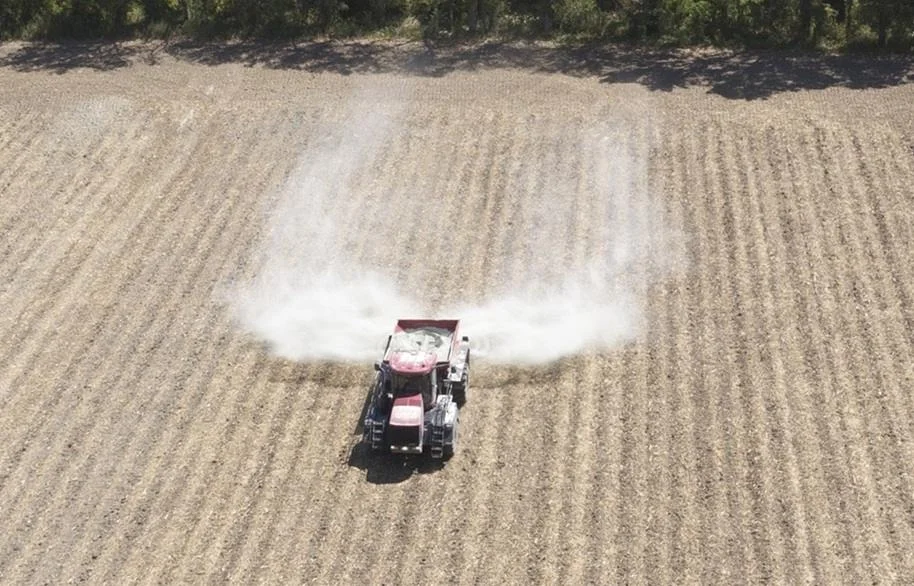
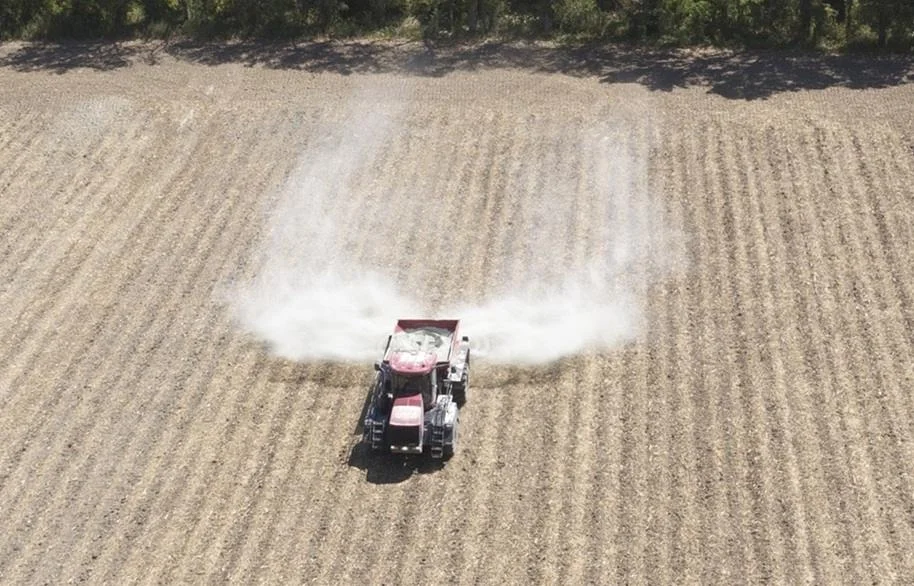
Founded in 2022 by Stanford scientists and entrepreneurs, Terradot accelerates rock weathering by crushing basalt and spreading it across farmland. The process speeds the capture of CO2 from rainwater in rock, while the company says it can also improve soil health. In broad terms, enhanced rock weathering aims to speed up a natural process by making more rock surface available to interact with water and the surrounding environment.
The method's practical appeal is tied to its use of farmland, where rock can be spread across large areas. But deployment alone doesn't settle the question of how much carbon a project removes or how that amount is verified. Field conditions can shape how a process performs, so evidence from actual projects matters alongside the underlying scientific rationale. Years of field data, as Sekula describes them, are therefore relevant to lenders assessing delivery and to buyers evaluating what they're purchasing.
There are two claims here, and they shouldn't be blurred together. Carbon removal is the central commercial proposition in the reported agreements, while improved soil health is an additional benefit Terradot says the method can provide. The source doesn't provide measurements for either claim or describe how the company evaluates them. For a reader, that means the financing news says more about the project's commercial structure than it does about independently established environmental results.
Terradot plans to spread one million tonnes of rock across 60,000 hectares (150,000 acres) of US and Brazilian farmland during 2026 and 2027. The planned area and material volume indicate an effort to move beyond small field deployments, though the source doesn't break down how much rock will go to each country or how the rollout will be staged. A plan at this scale can generate operating experience that smaller trials can't provide. It also makes execution central: sourcing, transporting and spreading the material across that much farmland will have to work as intended.
HASI Co-Chief Investment Officer Annmarie Reynolds said the company’s contracted demand, field data, repeatable deployment model and approach to risk matched qualities the firm seeks in its investments. Her description points to the factors that make this financing notable: buyers have committed, Terradot says it has accumulated field data, and the company presents deployment as repeatable. Those are the ingredients the parties cite, not proof that future projects will deliver identical results. The planned rollout will put that model to work at a scale that can inform future project financing.
What the financing can prove
This is more significant than it looks, but the significance is narrow. The disclosed debt suggests that at least one infrastructure investor is willing to finance enhanced rock weathering when a company can point to contracted buyers and field experience. That gives the sector a concrete example of how project debt might fit alongside purchases of carbon removal. It doesn't establish that the approach is already easy to finance, or that other projects will meet the same criteria.
If you're working in this space, the detail to watch is how the company turns its planned deployment into a record that buyers and lenders can evaluate. Contracted demand may help with forecasting, while field data can help bound uncertainty; neither removes the need to show that delivery matches expectations. The source doesn't report a schedule of interim results, so the planned work remains a commitment to execute rather than evidence of completed performance. And yet, building that operating record is precisely what Sekula says the financing could help make possible.
The numbers here are underwhelming if read as a verdict on carbon removal's maturity: one financing announcement can't establish a broad market pattern. Read more carefully, it's a practical test of whether contracted demand and field experience can support capital for a defined rollout. If Terradot completes the planned application and documents delivery, that could inform how the next projects are assessed. For now, the central question is straightforward. Can the model repeat?

Discussion
Sign in to join the discussion.