Guatemalan startup PINA&KAKAW is testing pineapple fiber for textile production while building rural jobs. Its next test is consistent commercial supply.
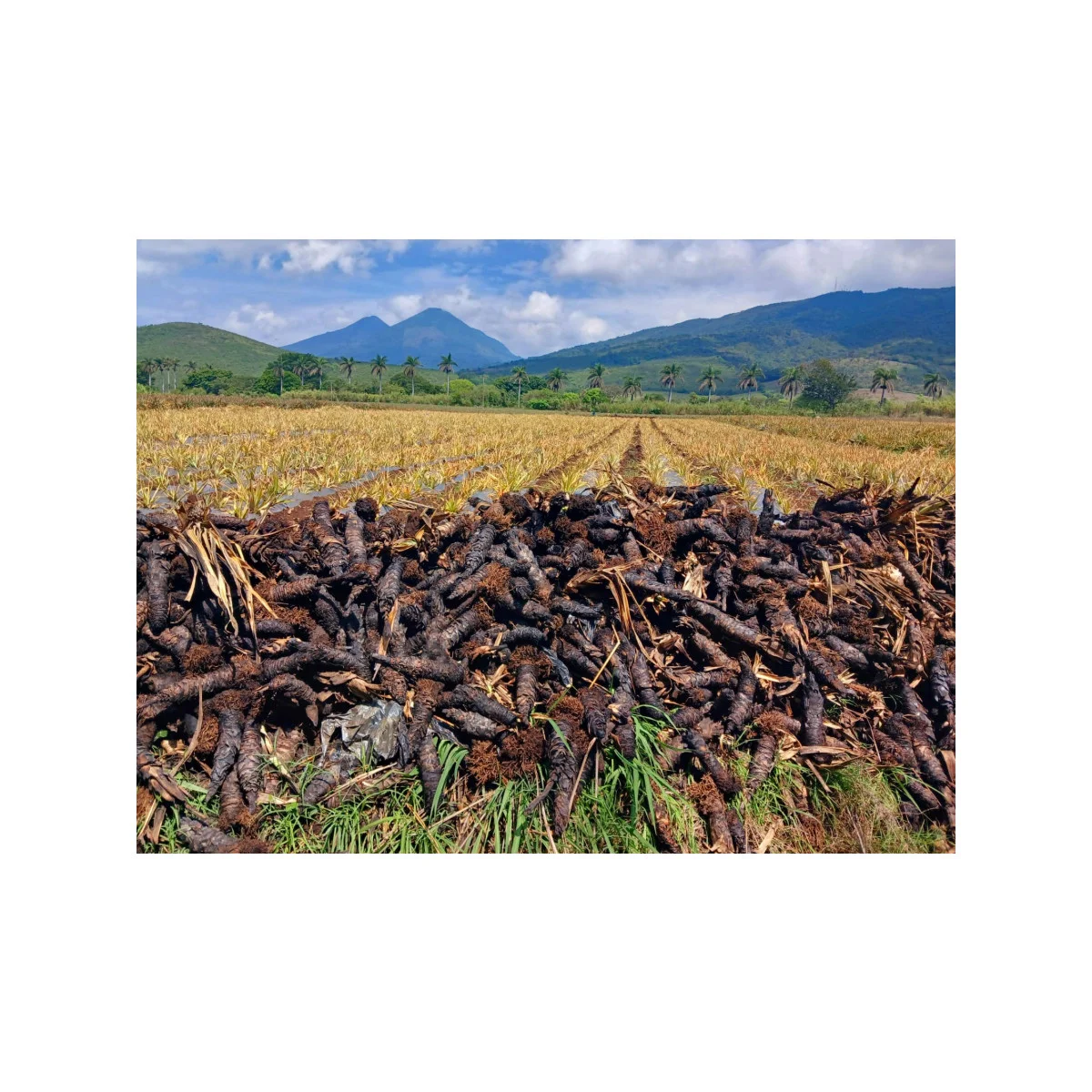
The test for pineapple fiber isn’t whether it can be made into a textile. It’s whether a steady supply can meet manufacturers’ specifications and economics while creating value for the rural communities that produce it. That’s the challenge facing PINA&KAKAW, a Guatemalan company turning post-harvest pineapple leaves into fiber.
Co-founded by Daniela Sagastume and her husband in May 2025, the company is building a local production model around agricultural residues that are often burned or left in fields. Its approach links farms to fiber processing and textile manufacturing, with composting as a destination for the remaining organic material.
From agricultural residue to usable fiber
Pineapple leaves contain natural fibers, but getting from leaf to yarn involves a chain of practical steps: collection, extraction, cleaning, processing and, eventually, blending and spinning. PINA&KAKAW has spent months testing those stages with textile manufacturers and technical specialists.
The company’s initial development work has focused on a blend of approximately 20% pineapple fiber and 80% cotton. It has produced yarn and knitted jersey fabric with fiber collected and processed in Guatemala. Those trials show that local material can enter established manufacturing processes; they don’t yet establish that production can scale reliably.
Other blends are also under investigation. PINA&KAKAW has explored combining pineapple fiber with wool and is developing trials with recycled polyester for potential carpet and rug applications. Each use brings its own requirements for fiber length, softness, strength and consistency, as well as its own tolerance for production losses.
The distinction matters. A handmade textile can demonstrate a material’s appeal, while industrial production demands repeatable performance across equipment and batches. Manufacturers need fiber that behaves predictably and meets quality standards. The company’s case will depend on those results as much as on the environmental rationale.
Pineapple fiber itself has a long history in the Philippines, and commercial applications have been developed by companies including Ananas Anam. PINA&KAKAW’s stated opportunity is different: establish production in Guatemala, connect agricultural communities to textile makers and prepare fiber for commercial spinning and fabric production.
A local supply chain with a broader purpose
The founders’ focus on community participation draws on earlier environmental work in Guatemala. Before starting PINA&KAKAW, the co-founder spent several years leading environmental operations, including helping establish 4ocean’s work in the country. Those teams removed more than four million pounds of plastic and waste from waterways and coastlines and created over 50 local jobs.
That experience shaped a view of environmental projects as economic systems as well as cleanup efforts. For PINA&KAKAW, that means involving the communities where the pineapple residues originate and creating paid work tied to processing them.
Since operations began, the company says it has diverted more than 150,000 pounds of pineapple agricultural biomass from conventional disposal and potential burning. Its process aims to use the leaves for fiber and send the remaining organic matter to composting, returning nutrients to agricultural soils.
The company has also assessed its environmental impact with the Food and Agriculture Organization’s EX-ACT methodology, which evaluates greenhouse gas effects associated with agricultural and land-use activities. PINA&KAKAW reports an estimated 76 tonnes of CO2-equivalent emissions impact associated with its activities.
Employment is another part of the model. Women play a central role in fiber processing and production, and the company says its local team is developing machinery and production skills. The founders also identify work for women and young people in rural Guatemala as a core business objective.
Commercial fit remains the central hurdle
Environmental performance can open a conversation with manufacturers, but it cannot close the sale on its own. Textile makers must be able to run a material through their equipment, meet product specifications and justify its cost. A fiber that fails any of those tests is unlikely to move from trial to regular orders.
PINA&KAKAW has held more than 150 conversations with industry professionals, prospective customers, technical specialists and other stakeholders as it refines its product and learns what buyers need. Three potential customers are currently evaluating its materials for flooring and carpets, hospitality textiles and specialized performance textiles. These are evaluations, not confirmed contracts.
Technical exchanges with specialists in Asia, particularly the Philippines, have also helped the company draw on experience from a region with a long tradition of pineapple fiber production. That knowledge-sharing points to a practical route for a young producer: build on existing expertise while developing a distinct supply base in Guatemala.
The company’s progress has attracted competition recognition. In 2026, PINA&KAKAW won first place in Guatemala’s ClimateLaunchPad competition and then first place in the Central American regional competition. The wins secured the opportunity to represent Central America at the ClimateLaunchPad Global Finals in Singapore.
Recognition can help introduce the idea to new audiences, but the next phase is operational: produce consistent fiber at a viable cost, improve manufacturing efficiency and convert evaluations into long-term customers. Those steps will determine whether the early textile trials can support a dependable business.
Building value where the leaves grow
PINA&KAKAW’s work illustrates how much infrastructure sits between an agricultural residue and a marketable material. Collection, processing, quality control and customer requirements all have to align. Circular production depends on that whole chain, including farmers, workers, processors, manufacturers and buyers.
Guatemala brings agricultural resources, manufacturing capabilities and a workforce that can contribute to such a system. The company is trying to connect those pieces around pineapple fiber, while keeping the benefits close to the places where the raw material originates.
The effort is still early, and commercial production at scale remains ahead. But each processed batch and completed textile trial answers a more useful question than whether waste can be repurposed: whether local processing can deliver a material manufacturers will use and communities can earn from. That is the measure that will shape pineapple fiber’s next chapter in Guatemala.



Discussion
Sign in to join the discussion.